• Business Growth & Optimisation

Top Customer Service: The 5 Things Your Business Must Get Right

5 min. read
By

Discover what your business should do to ensure positive customer experiences.

The way you treat your customers says a lot about your business. No matter the quality of your products or the value of your pricing, you can’t afford to skimp on delivering exceptional customer service.

Read on to discover five things your business needs to get right if you want a reputation for top customer service that keeps people coming back.

1. Broad card acceptance

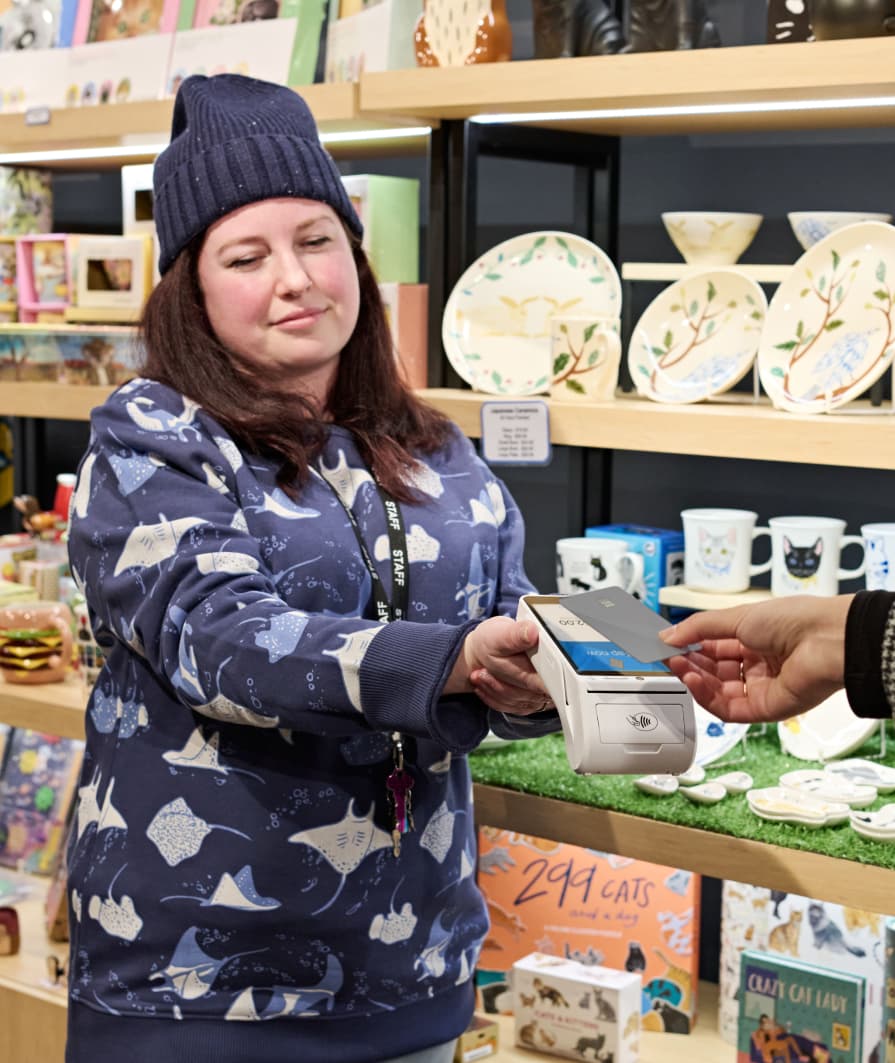
Your business can’t afford to fail at the point of sale. Refusing common card types is the easiest way to disappoint customers, and one that can be avoided with a simple switch.

There are clear benefits to giving your customers the freedom to pay with their card of choice. Most importantly, you’ll never be forced to turn a customer away or send them to the nearest ATM to get cash out. Keep in mind it’s not only one sale you’re putting at risk by rejecting certain cards — in reality, any customer you lose at that moment might never return.

If, for example, your business doesn’t accept American Express, you’re limiting customers’ credit card payment options to Visa and Mastercard. This matters more than you might think. Why? Because AMEX is accepted at tens of thousands of Australian businesses, including post offices and supermarkets. Your customers are getting used to it being a regular payment option for essentials, and picking up points along the way.

How can Zeller help?

Zeller accepts every common card type — including AMEX —  for a low, flat fee of 1.4% for all in-person transactions. This means you’ll never need to refuse a customer’s card of choice.

2. A quick payment experience

In a world where people expect their interactions with a business to be smooth and hassle-free, any bottlenecks or errors at the point of payment can prove costly. In short, it pays to make the customer journey as seamless as possible.

It’s essential for every business to provide a quick payment experience — not least because delays can lead to queues. This in turn might cause some customers to abandon the line, and their purchase, altogether. Even if your customers remain relatively patient at the time, a less than optimal checkout experience could later impact their view (not to mention their review) of your business.

Rather than considering the payment process as just a transaction, think of it as another valuable touchpoint with your customer. You don’t want all the positive aspects of their experience up to that stage — such as helpful staff recommendations and ease of finding the product or service they were looking for — to be undone delays in the payment process that could have been easily avoided.

How can Zeller help?

Zeller Terminal processes transactions in a matter of seconds. It is also mobile — so it can easily be carried around the shop floor or to a diner’s table. This prevents lengthy queues from forming. Plus, back-up connectivity (Wi-Fi, mobile hotspot and Zeller SIM Card) ensures you won’t need to wave the terminal around or carry it to another part of the store trying to process the transaction. And in the event of a dropout or other disruption to your internet network, you won’t need to turn any customers away.

3. Fast refunds

While having to refund a customer is never ideal, refunds are a normal part of business. Whether your customer is dissatisfied with the goods or service received, or they’ve simply changed their mind about a product for reasons beyond your control — such as a sizing issue, you should be able to process a refund promptly and with minimal fuss when required.

What you don’t want to do is turn a refund into an awkward, drawn-out experience that leaves a lasting poor impression of your business. It’s much better to give customers the ease of mind that, should a refund be requested, the whole experience will be painless.

How can Zeller help?

Refunds with Zeller are quick and simple. By streamlining this process using Zeller technology — and eliminating the need to issue store credits — your business could save valuable time that might otherwise be wasted on managing refunds. Basic refund information can even be included on your custom Zeller receipt (SMS and email receipts are free to issue), so your customers don’t have to spend time and effort searching for next steps when they feel a refund is owed.

4. Subtle tipping prompts

Zeller research has found tipping in Australia is becoming more popular. In fact, 70% of Australians are willing to leave a tip when dining out or taking away. Diners are also more likely to leave a tip when the transaction is processed through an EFTPOS terminal, and they are prompted to do so.

That said, it’s still good practice to make tipping available without being forceful or getting in a customer’s face. If your prompt is too pushy — or it automatically nominates an amount that’s too high for the customer’s liking — there’s a fair chance they will opt to not leave a tip at all. And if customers feel confused or under pressure during payment, it’s probably fair to say your business is pushing too hard.

Giving customers the option to leave a tip the right way, however, is entirely acceptable. It’s a worthwhile endeavour, because tips can increase staff satisfaction. The trick is to use subtle tipping prompts — ideally on your EFTPOS terminal screen — that don’t overly disrupt the payment in process.

How can Zeller help?

Not all customers will be comfortable tipping the same amount. That’s why Zeller Terminal allows you to set three custom percentage-based tipping points. Alternatively, you can nudge the customer to enter their preferred amount. This flexibility is important because people like to be given options, not ultimatums.

Tipping feature-2022 09-blog-animation-v4

5. A good customer service team

Your business could have everything in place to be successful, yet if everyday interactions between staff and customers are not memorable for all the right reasons — your business will ultimately suffer.

It’s very difficult to deliver good customer service without a good customer service team, and even the best people need quality training and support to do their jobs well. In addition to prioritising recruitment and retention, you should continue to invest in training your customer service team — or indeed yourself if you’re the only employee of the business — on customer service best practices, techniques and latest trends.

One of the most important skills you'll need to teach your team is how to deal with a declined payment. An agitated customer is more likely to not follow through with their purchase, but if you have a well-versed employee that communicates effectively with the customer, they can often remedy failed payment issues and create a positive outcome for everyone involved.

How can Zeller help?

Equipping your staff with the knowledge to smoothly handle customers and troubleshoot declined transactions is paramount to your business.

In the event a payment is declined, staff can exit the transaction flow on Zeller Terminal and discover the reason for the decline on the Transactions screen. Or, they can log in on Zeller Dashboard. Armed with the reason for the declined payment, staff can attempt to progress the transaction and make the sale.

The Zeller Customer Success team is always on hand to assist your staff with any queries they may have.

Power Up Your Business with Zeller’s POS Integrations

If you’re shopping around for a payments provider or a point-of-sale system, you may have come across the term ‘integrated EFTPOS’. In this article, we explain what this technology is and how your business can benefit from integrating with Zeller Terminal. Integrated EFTPOS is a direct connection between your point-of-sale (POS) system and your EFTPOS machine. When these two systems are integrated, sales totals that are rung up on the POS are pushed automatically to the  EFTPOS terminal , eliminating the need for staff members to key in the sales value manually on the machine before payment. With the tap of a button on your register, payment details are automatically transferred to your EFTPOS terminal, ready for your customer to tap, dip, or swipe. To explore the best POS systems available in Australia and find one that suits your needs, check out our comprehensive blog article on the topic. Connect Zeller Terminal with your point-of-sale. Push sales from your point-of-sale (POS) system to Zeller Terminal for faster transactions and better accuracy. Discover integrated EFTPOS Six ways Zeller Integrated EFTPOS will benefit your business. 1. It reduces human error. An unintegrated EFTPOS machine requires a staff member to manually enter the sales total into the terminal before the payment can be processed. Unavoidably, this process will lead to human error. If a customer is accidentally overcharged, not only do you risk losing their business in future, but it takes time away from your staff to process refunds for incorrect payments. Similarly, if a customer is accidentally undercharged, it is unlikely that you will be able to recoup the lost revenue, and it can lead to frustration and confusion when it comes to end-of-day reconciliation. Integrated EFTPOS eliminates these risks, by removing the need for manual entry into the EFTPOS machine. 2. It makes transactions faster. Integrated payments allow you to serve more customers, faster than ever, by removing unnecessary steps in the payment process. Whether you use a touch screen or a barcode scanner, integrated EFTPOS allows data to be pulled directly from your system, reducing waiting times at the checkout. You’ll also save time at the end of the day. Thanks to two-way communication between your devices, end-of-day reconciliation becomes a breeze, with payment transactions relayed back to your POS automatically. 3. It’s free and fast to set up. Although some merchant services providers may charge upwards of $10 per terminal to integrate with your POS system , Zeller’s integrated EFTPOS solution is free. Similarly, the process of getting set up is simple and self-service. Traditionally, integrating EFTPOS and POS systems has required a third party engineer or integration specialist to arrange a time to visit your business premises in person, with Zeller, you can connect your systems remotely, and in most cases, in less than 15 minutes. “Whether it’s at the table or the bar, we can just hit a button on our POS and it pops up on Zeller Terminal. It looks beautiful, and the graphics are fantastic. All customers have to do is tap and go. Transactions, receipts and refunds are easy.” Dom Garreffa, Pomelo and Bouvardia 4. You won’t lose sales if your POS system fails**.** In the event of a POS system outage (or other disruption to your POS system), every other integrated EFTPOS solution will lock you out of your EFTPOS terminal – forcing you to contact their customer service centres in order to get back up and running. We understand it’s critically important that, no matter what, you are still able to process sales at your business. If your POS system suffers a disruption for any reason, you can continue to use Zeller Terminal. Simply toggle on ‘Card mode’, and you will be able to continue processing transactions via Zeller Terminal without any downtime. 5. You have over 600 POS platforms to choose from. Whether you’re using a  cloud-based or on-premise POS  solution, with Zeller, you can be confident that – no matter which POS you choose, or industry you operate within – you’ll get the benefit of integrated payments. Zeller is proud to partner with over 600 POS providers, including leading solutions such as  Abacus , Impos ,  Zii ,  H&L ,  Oracle ,  Whoods ,  Redat ,  Task ,  Hike , plus a long list of others to service a wide range of industries and business sizes. To view the full list of POS providers that Zeller integrates with, visit the  Zeller Partner Hub . Not sure what POS system to choose? Use our Best POS Systems Guide for 2024 to help you find the right provider for your business. 6. You can turn tables faster with Pay at Table. Hospitality businesses using  H&L POS  enjoy the added benefit of Zeller’s innovative  Pay at Table  solution. This integrated technology allows Zeller Terminal to function as an extension of your H&L POS, allowing staff members to view open tables, see total outstanding bills, take payments and close tables — all on one device. Rather than the customer paying at the counter or finalising the bill in the traditional, time-consuming manner, waitstaff can deliver the bill and the mobile payment device, all at the same time. Read our blog article to learn how  Pay at Table  works. Ready to connect Zeller with your favourite tools? Discover Zeller Partner Hub

Zeller Dashboard: The Powerhouse Behind Your Business Cash Flow

The difference between a business that thrives and one that stalls often comes down to one thing: how well cash flow is managed. In this article, we explain why having a real-time reporting engine like Zeller Dashboard is key to your cash flow management strategy – and why your bank is holding you back . The key to healthy business cash flow is twofold: monitoring and acting . Knowing where your cash is coming from and going is one thing; using that insight to guide your decisions is another. Master both, and you’ll strengthen your business’s financial health – setting yourself up for long-term success and growth.  However, keeping track of your finances can quickly become overwhelming when cash is moving through multiple bank accounts, EFTPOS systems, invoicing tools, and expense platforms. One of the smartest cash flow management strategies is to bring everything together in one place. That’s where Zeller Dashboard comes in. By uniting your business’s financial activity in one online dashboard, it gives you detailed insights and real-time visibility that your traditional bank can’t match. From tracking sales and invoice payments to managing expenses and accruing interest, read on to discover three ways you can harness Zeller Dashboard to take control of your business cash flow. What is Zeller Dashboard? Zeller is an all-in-one financial platform that helps businesses accept payments, manage their money, and pay expenses – all from one place. At the heart of it is Zeller Dashboard: a central hub for tracking your financial position in real-time, and enabling you to use that data and insight to improve business cash flow. It transforms your financial information into clear, actionable reports and insights that help you make smarter, more informed decisions. Every way that cash flows in and out of your business is tracked on Zeller Dashboard. Read on to learn how. 1. Cash flow in: card payments, invoices, and POS See all your incoming sales in one place – no matter how your customers pay. In Zeller Dashboard, your latest transactions are automatically compiled into a single report under the Payments tab (and in the Latest Payments preview on the Overview page). This report brings together payments from five different sources: Terminal, Point of Sale, Invoice, Dashboard, and Zeller App. Below, we’ve outlined each source and explained how to uncover specific insights for each within Zeller Dashboard. 1. Terminal Terminal refers to any payment accepted through Zeller Terminal . If your business uses multiple terminals, you can rename each device for easy identification and more detailed tracking. For example, to find a specific transaction processed at your ‘Front Bar – St Kilda’ device, simply filter transactions by that terminal name. You can also assign terminals to specific sites, allowing you to view all payments from a particular location by filtering by Site. To filter transactions, go to Payments > Transactions, then click on the magnifying glass icon in the top right hand corner. 2. Point of Sale Point of Sale refers to any payment processed through your POS system – whether it’s Zeller POS Lite or another POS integrated with Zeller Terminal . If you’re using Zeller POS Lite, you can view detailed insights into your sales within Zeller Dashboard by navigating to the POS Lite tab. Here, you’ll find visual reports showing your Top Items by Revenue and Top Items by Quantity Sold. For deeper analysis, you can export a detailed sales breakdown – including the number of units sold, prices, SKUs, and categories – to create customised reports. You can also filter by specific dates and times, such as reviewing how many of one item you sold during the Christmas period last year compared to the year before, helping you forecast stock and ingredient orders more accurately. 3. Invoice Invoice refers to any Zeller Invoice paid by card (invoices paid via bank transfer appear in the Finance tab – see below). In the Invoices tab, you can view all your invoices – paid, unpaid, or drafted – and filter them to find exactly what you need. You can also create new invoices directly from this tab, making it easy to manage your billing in one place. To see a rolled-up or month-by-month summary of all your invoice payments, head to the Overview page and filter by Invoices. This gives you a clear snapshot of your invoicing performance and cash flow at a glance. 4. Dashboard  Dashboard payments refer to any payment received via Zeller Virtual Terminal . This feature lets you send a secure payment link directly from Zeller Dashboard via email, SMS, or any platform you choose. Your customers can then pay privately using their card details, from anywhere, at their convenience. You can find more detailed reporting about these payments under Transactions within the Payments tab. 5. Zeller App  Zeller App Payments refer to any sales made using Tap to Pay on Zeller App , an EFTPOS solution that works on Apple and Android smartphones. Like Zeller Terminal, you can name your devices for easy tracking – for example, ‘Helen’s iPhone XR’ – and assign them to specific sites, then filter transactions by device or site on the Transactions page. Sales from the above channels are settled nightly, 365 days a year. Once settled into your Zeller Transaction Account , your balance is updated automatically on the Accounts page, as well as in the Finance tab on the Overview page. From here, your funds are ready to be used.  2. Cash flow out: debit cards and expense management Once your funds have settled, they’re ready to pay for your business expenses. For even greater clarity on where your money is going, Zeller Dashboard lets you create unlimited accounts and cards, giving you detailed insights into your outgoing cash flow. A smart cash flow management strategy is to set up multiple Zeller Transaction Accounts for different purposes – for example, marketing, direct costs, GST/PAYG/Super, operations, payroll, rent, or subscriptions and software. You can then link individual Zeller Debit or Corporate Cards to each account. Corporate cards are especially useful for managing team or project expenses, allowing you to set individual budgets, reset periods, and maximum transaction limits per card. In the Accounts tab, you can view your total available balance at a glance and track all transactions, including settlements, transfers in and out, and card spending. 3. Cash accrued: growing your business savings and cash flow management strategies By regularly monitoring the Payments and Finance tabs in Zeller Dashboard, you’ll gain a clear picture of your business’s cash inflows and outflows over time. What you do with these insights is what will make the biggest difference in improving your cash flow. Here’s how you can harness Zeller Dashboard to inform decisions that strengthen your finances: Daily: Review transactions in real time Whether you’re on your laptop or checking via the Zeller App , make a habit of reviewing sales and expenses throughout the day. Watch for anything that seems out of place – unusually low transaction values or unexpectedly high expenses. You know your business, so spotting outliers is often quick and easy. Once a week: Review the previous week’s sales At the start or end of each week, compare last week’s sales in Zeller Dashboard against your goals or past results. If you’ve fallen short, act early: increase sales, cut non-essential spending, or both. This could mean ramping up marketing efforts or pausing discretionary expenses until cash flow improves. Once a month: Identify trends With a month of data, start spotting patterns – busiest days, peak trading hours, and product performance. Use these insights to optimise staffing, opening hours, and stock levels, ensuring you’re resourced where and when demand is highest. Comparing month-to-month or year-on-year data can reveal seasonal trends. For example, October is the time to prepare for the busy summer season: reviewing last year’s sales can help you know when to hire Christmas casuals or order extra stock. Ongoing: Build a cash reserve Once you know roughly how much surplus cash you generate each week – profits not needed for immediate spending – consider scheduling automatic transfers to Zeller Savings Account , where these funds can earn up to 4% p.a. interest. A cash reserve is essential for covering late payments, rising overheads, overstocked inventory, or seasonal fluctuations. It also provides a safety net for unforeseen expenses, like equipment breakdowns, legal costs, sudden operational increases, or economic downturns.

Customer Reviews: How to Respond to Positive and Negative Feedback

Your guide to crafting review responses that win over customers and drive more sales. Online reviews are part and parcel of running any business. After all, customer reviews and ratings are the new word-of-mouth — and the consequences of not having any can be costly. 92%  of consumers are reluctant to buy if no reviews are available. Yet what happens when a poor review threatens to impact business? Thankfully, there is often an opportunity to turn the situation around by taking a complaint on board. Other times, simply protecting your brand image could be the best case scenario. Either way, it’s important to respond to reviews — whether they’re positive or negative. Keep reading to discover how to use your online review responses to grow your business. Ready to discover a smarter way to take payment? Meet Zeller Terminal How influential are online reviews? More consumers are reading online reviews than ever, and these reviews significantly influence purchasing decisions. According to a 2022 BrightLocal survey: 67% of consumers will consider leaving a review after a positive experience. 40% will think about leaving a review for a negative experience. 77% of consumers in 2021 always or regularly read online reviews when browsing for local businesses — up from 60% the year prior. 79% trust online reviews as much as personal recommendations. Whether you run a mobile dog grooming service or a barbershop, beauty salon or busy restaurant, a portion of your customer base will want to give their two cents about your business. Even more potential customers want to read those opinions. Customer reviews can be genuinely valuable tools for improving customer engagement, generating trust, and ultimately boosting sales. Making the most of review platforms Digital reviews are critical to customer engagement and business growth. Let’s explore how your business can take advantage of the different review platforms available. As a business owner, it's highly unlikely that you have bucketloads of time on your hands. It's worthwhile knowing which platforms are worth your effort, and which aren't. In fact, 85% of all reviews come from only four sites. The world’s go-to search engine and review site, Google — 73%. Crowd-sourced review/rating platform Yelp — 6%. Social networking giant Facebook — 3%. Travel site/app Tripadvisor — 3%. More consumers are using Google to evaluate local businesses than ever before; 81% googled local businesses in 2021, compared to 63% tin 2020. Plus, with zero-click searches rising to 65% in 2020 and customer reviews helping to boost SEO performance for brands, Google clearly remains the number one review platform your business needs to consider. The best place to start, if you haven’t already, is by creating a free Google My Business account. You’ll then be able to claim your Google My Business listing, manage your profile across the platform — including Google Maps — and set up notifications to receive reviews instantly. Google reviews are essential to create credibility and build the reputation of your brand. Google has even confirmed that responding to reviews of any nature increases your website's SEO performance. It raises an obvious question for business owners — how to respond to Google reviews, both favourable and otherwise? Responding to good and bad reviews What’s great about having business accounts on each of the above platforms is the scope to proactively manage positive and negative reviews. By responding appropriately to the poor or indifferent as well as the glowing reviews, your business demonstrates its willingness to listen to customer concerns while aiming to exceed expectations. You might be able to restore the loyalty of a customer following a less than ideal experience, or build an even stronger connection with a happy customer in the moment. At the same time, you’ll show potential customers that you take the customer experience seriously and you’re prepared to acknowledge — and better yet, fix — any quality-of-service issues raised in the public domain. Tips for responding to good reviews At face level this appears to be an easy win, and in many ways that’s true. But remember that responding to positive feedback can build on the momentum the customer has already created. How can you add value to this interaction? Here's how to respond to a 5 star review on Google, or any other platform. Respond to the message quickly. Express your gratitude. This shows that you pay attention to all customers — not just the unhappy ones. Provide additional value where possible — it doesn’t have to be monetary. Encourage customers to support your business by sharing their review with others. Record the customer’s feedback so you know what you’re doing well. Are you getting positive feedback on a regular basis? Here are some examples you can use to make the most of them. Example 1: Dear Emma, Thanks so much for taking the time to post this review and offering such positive feedback. We pride ourselves on providing a service that exceeds our customers’ expectations, so I’m very pleased to hear about your in-store experience. Is there anything we can do to make your experience even better next time? Thanks again for your review, John, Owner. Example 2: Dear Jack, I'm thrilled to hear that you loved your meal at our restaurant. Our chefs enjoy mixing up the menu with seasonal produce, so I hope to see you here again soon – say hello next time you pop in for dinner. Thanks again for stopping by, Jane, Owner. Tips for responding to bad reviews 1 or 2 star ratings immediately stand out for all the wrong reasons. Unfortunately, bad reviews come hand in hand with business. It’s highly likely you’ll receive one at some point. Think of less desirable reviews as opportunities to show off your exceptional customer service skills. A business that can resolve problems outlined in negative customer reviews can actually end up reaping rewards down the line. Your approach here provides the public with a strong sense that your business really does care about its customers. On the flip side, ignoring poor reviews will only damage your reputation and customer relationships further. What should you do about a bad review? Here's how to respond to a 1 star review on Google, or another platform. Evaluate the feedback internally to better understand what has happened. Publicly respond to the review, without using defensive or frustrated language. Aim to start a direct conversation with the reviewer through the right private channels. Be as honest and transparent about any mistakes as you realistically can. Ask for more information if the details of the complaint are unclear. Address the specific concerns and look to offer solutions. If appropriate, offer an incentive or another form of reimbursement. If you’re confident the customer is satisfied, ask if they would consider updating their review. Best practices for managing reviews Finally, don’t forget the following best practices for managing reviews. Make sure to audit your platforms weekly and respond in a timely manner. Restrict access to senior staff members only — this ensures no junior staff members are responding to reviews. Always be polite, courteous and accommodating when responding to reviews and engaging in further communications. Keep reviews positive with a little help from Zeller Zeller can help your business with this final, key step of the customer journey by making the payment process as smooth as your customer review responses. Zeller Terminal accepts every common card type (even AMEX), giving customers one less reason to be frustrated. You’ll never need to refuse a customer’s card of choice, or send them to the nearest ATM to get cash out. Payments can also be accepted over the phone. Your chances of receiving a positive online review will indirectly improve when your business takes the time and hassle out of every transaction. With Zeller, transactions are quickly processed in seconds — which means less chances of queues forming, and a positive transaction experience for all.