EFTPOS & Merchant Fees in Australia (2026 Guide)
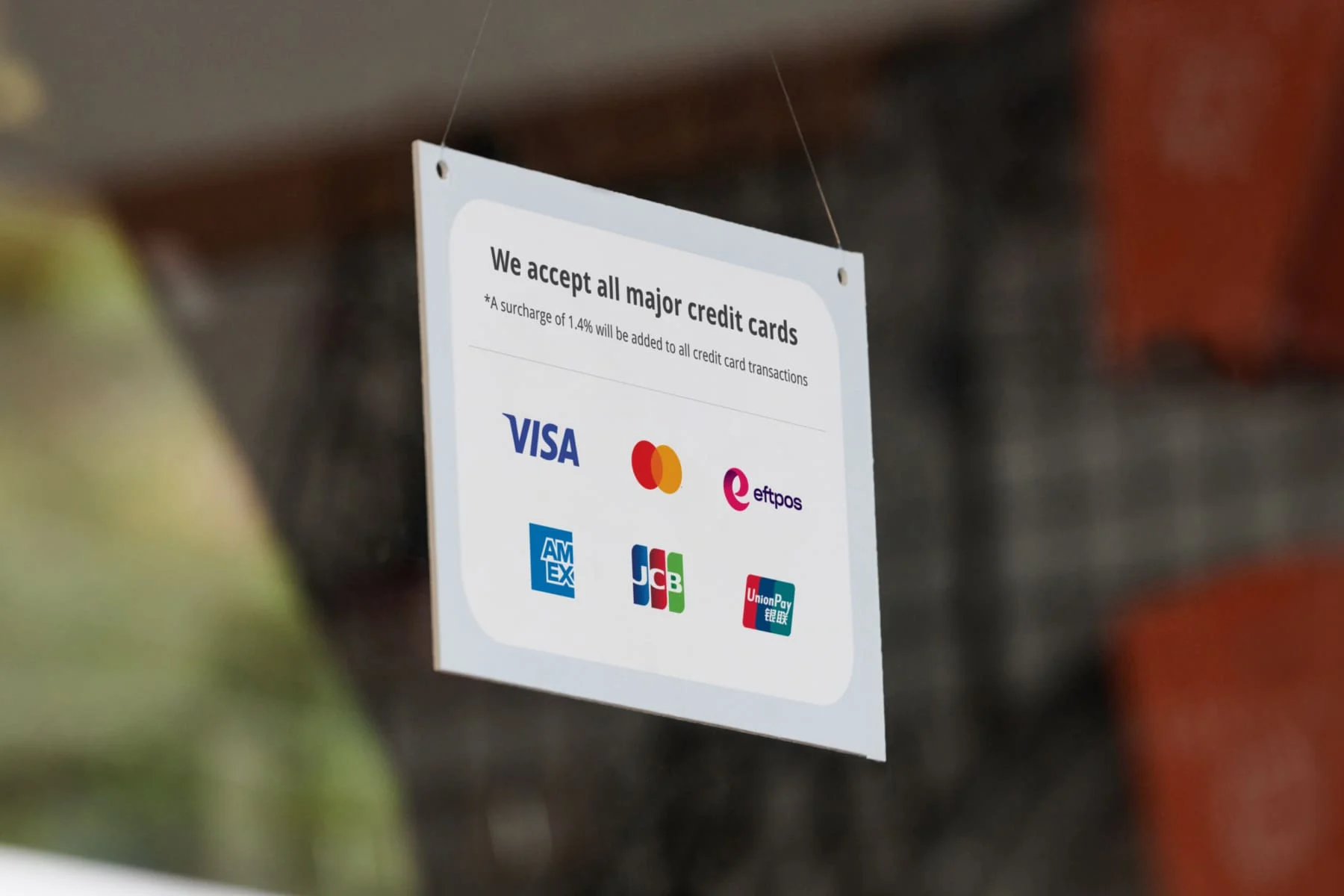
Merchant fees are a necessary part of accepting card payments, but without a clear understanding of how much you’re paying, they can quietly eat into your margins. This guide explains what EFTPOS and merchant fees are, everything that makes up the total cost of accepting card payments (not just the transaction rate), and the practical steps Australian businesses can take to find the cheapest option for them. This guide explains what EFTPOS and merchant fees are, everything that makes up the total cost of accepting card payments (not just the transaction rate), and the practical steps Australian businesses can take to find the cheapest option for them. What are EFTPOS and merchant fees? “EFTPOS fees” and “merchant fees” are largely used to describe the same thing: the cost a business pays to accept card payments. Every time a customer taps, inserts, swipes, or pays online, several parties are involved in processing that transaction, and each takes a small fee for their role. These fees are typically charged as a percentage of the transaction value, with the exact amount depending on the card type, payment method, and provider’s pricing model. On top of the transaction fee, EFTPOS merchant fees can also include hardware, setup, and ongoing account costs, which is where a lot of businesses get caught out comparing providers on rate alone. Zeller is different: you pay one low, flat fee on every transaction, with no hidden costs or monthly hardware rental fees. Purchase your Zeller Terminal outright, and it’s yours to own and use forever. It's worth distinguishing merchant fees from general bank fees . Merchant fees relate specifically to accepting customer payments (card processing, terminal costs, and chargebacks). Bank fees cover unrelated banking services, like account-keeping charges, overdraft interest, or international transfer fees. The two are sometimes bundled on a merchant statement, but they're charged for different things and worth reviewing separately. For most businesses, accepting cards isn't optional; it's how the large majority of customers expect and prefer to pay. According to the RBA's 2025 Consumer Payments Survey, cards were used for around 73% of all consumer payments in Australia that year, and the share climbs higher again for everyday spending like supermarkets, food retail, transport and petrol. So, this is what merchant fees pay for: the infrastructure that makes the convenience and security of paying by card possible. Many of the incumbent banks and payment providers, however, have not adjusted their merchant fee pricing to reflect the current payment landscape, meaning that due to the high volume of card payments, businesses can end up paying thousands of dollars in merchant fees per year, which is why it’s so important you understand what you’re paying for. What makes up a merchant fee? A typical merchant fee is made up of three components: Interchange fees — paid to the customer's card-issuing bank. These vary based on card type (debit, credit, premium), transaction method (in-person or online), and whether the card is domestic or international. Card scheme fees — charged by card networks such as Visa, Mastercard, American Express, JCB, Diners Club International and Discover, covering the cost of maintaining payment infrastructure and network security. Merchant services fees — charged by your payment provider for processing the transaction and providing hardware, software, reporting, security, and support. Understanding how these components fit together makes it easier to compare providers and spot hidden costs. Why do merchant fees vary between businesses? Two businesses on the same provider and plan can still end up paying noticeably different effective rates. The main factors behind this are: Merchant Category Code (MCC). Every business is assigned an industry code when it sets up a merchant account, and this can influence the interchange rate applied to your transactions. Industry risk profile. Sectors with higher rates of chargebacks or fraud (such as travel, ticketing, or high-value retail) are often charged more, since providers price in the added risk. Transaction volume and value. Higher-volume businesses can often negotiate lower rates or access custom pricing, while very small or very large individual transactions can each carry their own cost dynamics. Payment method. Card-not-present transactions (phone, online, MOTO) generally cost more than in-person tap or insert payments, because the fraud risk is higher. Card mix. A business whose customers mostly pay with standard domestic debit cards will have a lower blended cost than one seeing a lot of premium credit, international, or Amex cards, under variable pricing, at least. This is one of the reasons flat-rate pricing like Zeller’s has become popular with many businesses: it removes most of these variables from the equation, since the rate you're charged doesn't change based on industry, card type, or transaction method. Terminal, hardware, and other EFTPOS fees The transaction rate is only part of the potential cost of accepting card payments. Depending on the provider, you may also encounter hardware, setup, account, refund and other fees. These are the other EFTPOS fees to check for before you sign up with a provider: EFTPOS terminal and machine fees — This is the cost of the physical device you use to take payments. Some providers sell terminals outright as a one-off purchase; others charge an ongoing monthly rental. A rental that looks cheap month-to-month can easily cost more than an outright purchase over 12–24 months, so it's worth doing the maths before comparing EFTPOS machine fees. With Zeller, you purchase your terminal outright, so there are no ongoing hardware rental fees. Establishment and setup fees — Some providers charge a one-off establishment or setup fee to get your terminal up and running, sometimes charged per device. If you use multiple EFTPOS machines, these costs can quickly add up. Some providers may also charge a separate fee to integrate your terminal with your point-of-sale system. Zeller has no establishment or setup fees, so you can get started without these additional costs. Monthly account fees and minimum volume requirements — Some providers charge a flat monthly account-keeping fee on top of transaction fees. Others only honour their advertised rate if you process a minimum monthly volume, potentially charging a higher rate or shortfall fee if you fall below the threshold. Zeller has no monthly account fees or minimum monthly transaction requirements. Refund and chargeback fees — Some providers charge a fee every time you process a refund or when a customer disputes a transaction. Zeller doesn't charge a separate fee to process refunds or manage chargebacks. Variable fees by card type — Some providers charge different rates depending on whether a customer uses a domestic debit, credit, commercial, international or American Express card. This can make your costs difficult to predict, as your effective rate depends on your customers' card mix. Zeller keeps things simple with one low, flat transaction fee, regardless of the card type. Foreign exchange and currency conversion fees — If you accept payments from customers using overseas-issued cards, or sell in a foreign currency, some providers may charge currency conversion fees on top of the standard transaction fee. Zeller's simple, transparent pricing means there are no hidden fees added to your standard transaction rate. PCI compliance costs — Businesses accepting card payments are required to maintain Payment Card Industry Data Security Standard (PCI DSS) compliance. While many providers include basic compliance support in their service, some charge separate monthly or annual compliance fees, with additional fees potentially applying for non-compliance. Zeller includes PCI DSS compliance as part of its service, with no separate compliance fee. Lock-in contracts and exit fees — Some providers require a minimum contract term and charge an early termination fee if you decide to leave. This can make switching providers expensive, even when a better deal becomes available. Zeller doesn't lock you into a long-term contract, giving you the flexibility to use your terminal for as long as it suits your business. Replacement fees — If your EFTPOS terminal is lost, damaged or stolen, some providers charge a replacement fee, particularly when you're renting hardware rather than owning it outright. Because Zeller Terminals are purchased outright, you own the hardware rather than renting it from Zeller. Accessories — Receipt paper, terminal stands and cables may be charged separately by some providers. Digital receipts can help reduce the ongoing cost of paper rolls, so it's worth checking what's included with your terminal. Zeller Terminals include the essential hardware you need to start accepting payments, with digital receipts available to help reduce paper use. How are merchant fees calculated? The way your fees are calculated depends on the pricing model your provider uses: Flat-rate pricing (Zeller) : You pay a single, fixed percentage per transaction, regardless of card type, offering predictability and making it much easier to forecast costs. Interchange-plus pricing: You pay the true interchange fee for each transaction, plus a fixed margin charged by your provider. Fees can vary widely month to month, making this model hard to predict and budget for. Tiered pricing: Transactions are grouped into tiers (qualified, mid-qualified, non-qualified), each with different rates. This model is often the least transparent of the three. Fees can also vary based on whether a transaction is card-present or online, and whether the card is domestic or international. What is least-cost routing? You may come across the term least-cost routing (LCR) when comparing providers. Most Australian debit cards are "dual-network", meaning they can process contactless transactions through either the eftpos network or the international credit card scheme (Visa or Mastercard) printed on the card. Because eftpos transactions are typically cheaper for merchants than routing through Visa or Mastercard, LCR automatically sends eligible transactions through whichever network costs your business less. If you're on a flat-rate provider like Zeller, this benefit is effectively built in already: you pay the same flat fee regardless of which network a transaction routes through, so there's no separate routing decision to optimise, and it's one less thing to worry about. How the surcharging reforms will impact EFTPOS fees from 1 October 2026 Until now, some businesses have managed the cost of accepting cards by passing some or all of the fee on to customers as a surcharge. The Reserve Bank of Australia (RBA) announced that from 1 October, surcharging will be prohibited by Visa, Mastercard, and eftpos. American Express has also announced that surcharging will be restricted on its cards. This announcement came as part of a wider package of payment reforms. You can read the full detail in our article on what the RBA's surcharging changes mean for your business . In practice, this means: If you currently surcharge, you'll need to remove it from your pricing before the deadline and either absorb the cost or build it into your advertised prices. Providers that offered "fee-free" or "zero-cost" EFTPOS by relying on surcharging can no longer structure their offer that way. The rate your provider charges you directly becomes the number that matters, since there's no longer a way to offset it at the point of sale. Why flat-rate pricing is more important than ever after EFTPOS surcharges end Surcharging was built around the idea of recovering your “cost of acceptance” — the total expense of accepting a card payment, including the interchange, scheme and provider fees covered earlier in this guide. Under variable-rate pricing, that cost can change depending on the card type, making it more difficult to calculate your payment costs accurately. With surcharging ending, businesses using a single flat transaction rate will have a much simpler time accounting for these costs by incorporating them into their product or service prices. What isn't changing The ban only applies to card payment surcharges — the fee that recovers card processing cost. It does not apply to service charges, like hospitality weekend/public holiday surcharges, booking fees, or other general service fees, since these recover labour and service delivery cost instead. See our guide to service charges in Australia for more detail. How to factor EFTPOS fees into your pricing Businesses that currently use surcharging to recover payment processing costs will need to consider how those costs are going to be accounted for in their pricing after the EFTPOS surcharge rules change on 1 October. One option is to build your merchant fees into your product or service prices. This means customers see one straightforward price, while your business accounts for the cost of accepting card payments within its overall margins. If you choose a flat-rate provider like Zeller, calculating this is simple. For example, if you want to receive $50 from a sale and your payment provider charges a 1.4% transaction fee, simply adding 1.4% to your price won't completely cover the fee. That's because the 1.4% fee is calculated on the final transaction amount ($50 + 1.4%). Instead, you can use this formula: Price = Target amount ÷ (1 − fee rate) For a $50 target with a 1.4% transaction fee: $50 ÷ (1 − 0.014) = $50.71 By setting your price at $50.71, the 1.4% transaction fee is approximately $0.71, leaving you with your intended $50 after the fee. As EFTPOS surcharging comes to an end, understanding exactly what you're paying to accept card payments will become increasingly important. Choosing a provider with a simple, predictable pricing structure like Zeller, can make it easier to factor payment costs into your prices and protect your margins. How to find the cheapest EFTPOS fees for your business While there's no single "cheapest" provider, because every business has different needs, however, there are a few principles that hold true for those looking for the cheapest EFTPOS merchant fees: Add up 12 months of costs, not just the transaction rate. A slightly higher transaction fee with no rental can beat a lower rate plus a monthly hardware fee. Compare flat-rate vs variable pricing against your real card mix. If many of your customers pay with Amex or international cards, a flat rate is usually cheaper than a variable one. Check for minimum volume requirements. A great advertised rate is meaningless if you don't process enough to qualify for it. Factor in refund and chargeback fees , especially if your business processes a higher-than-average number of returns. Confirm there's no lock-in contract , so you're not stuck if a cheaper or better option comes along. Review your statements regularly. If your pricing isn't clear, ask your provider for a full breakdown. Bundled or unclear fees are often where the real cost is hiding. Check POS and software compatibility before you commit. A cheap rate doesn't help if the terminal doesn't integrate with the point-of-sale or accounting software you already run. Factor in any integration or gateway fees this might involve. Compare merchant fees in Australia When you compare EFTPOS fees, look at the total cost of acceptance over 12 months (transaction fees, hardware, and any account fees) rather than any single number in isolation. Click here to compare Zeller with other Australian merchant services in more detail. Debit vs credit card fees: what's the difference? Debit cards generally attract lower interchange fees than credit cards, since funds are drawn directly from a customer's bank account. Credit cards (particularly premium or rewards cards like American Express) tend to cost more to process due to higher interchange rates. Should your business accept American Express? American Express is often associated with higher-spending customers, making it an attractive payment option for many businesses. While Amex has traditionally carried higher fees than Visa or Mastercard, flat-rate providers like Zeller now let you accept it without a separate, higher rate. Accepting Amex can: Increase average transaction values Improve customer convenience and satisfaction Help capture spend from international customers who prefer to pay with Amex How do EFTPOS fees compare to Buy Now, Pay Later? Buy Now, Pay Later (BNPL) services like Afterpay and Zip are a different category of payment method to card acceptance, but they're often compared side by side since businesses use both to reach customers. BNPL providers typically charge merchant fees of around 3–7% per transaction, noticeably higher than standard debit or credit card merchant fees, which usually sit under 2%. Despite the higher cost, many businesses still offer BNPL because it can lift average order values and attract customers who wouldn't otherwise complete a purchase. Whether it's worth it depends on your margins and customer base. It's rarely a like-for-like substitute for standard EFTPOS acceptance, more an additional option layered on top. Do merchant fees have GST? In Australia, merchant fees are generally subject to GST when charged as part of a payment provider's processing or service fee. This means the merchant services component of your fees usually includes 10% GST, which GST-registered businesses can typically claim back as an input tax credit on their BAS. Some elements (particularly interchange fees paid to banks, which may be treated as "financial supplies") can be treated differently and may not attract GST. Because fees are often bundled, check your provider's invoice or statement to understand how GST applies in your specific case, or speak with your accountant.
&w=3840&q=75)
&w=3840&q=75)
&w=3840&q=75)
&w=1200&q=75)

&w=3840&q=75)
&w=3840&q=75)
&w=3840&q=75)
&w=3840&q=75)
&w=3840&q=75)
&w=3840&q=75)
&w=3840&q=75)
&w=3840&q=75)
&w=3840&q=75)