&w=3840&q=75)
- Payments
How to Choose the Right EFTPOS Machine (2026)
Always review EFTPOS fees and contracts to avoid hidden or high costs.
Choose an EFTPOS terminal that’s intuitive and easy for staff to operate.
Ensure the terminal supports features like tipping and custom receipts.
Confirm reliable connectivity and internet backup options to prevent payment disruptions.
Fast settlement timing improves cash flow, getting funds into your account sooner.
In this guide:
What types of EFTPOS machines are available?How much does an EFTPOS machine cost?What EFTPOS features does my business need?How does an EFTPOS machine integrate with my POS system?How secure are EFTPOS payments?How reliable are EFTPOS machines, and what support is available?How do I manage reporting and analytics from EFTPOS transactions?How quickly will my funds settle after a card payment?How quickly can I get set up with a new EFTPOS machine?Choosing the right EFTPOS machine can impact everything from your cash flow to your customer experience. Whether you’re launching a new business or upgrading your current setup, this guide breaks down exactly what to look for, and what to avoid, before signing a contract.
Choosing the right EFTPOS machine matters. You’ll rely on it every day to take secure, fast cashless payments and keep your cash flow healthy. But not all providers are created equal. Some lock you into lengthy contracts with high transaction fees. Others take days to settle your funds. And some still offer outdated hardware that can slow you down operationally.
EFTPOS technology has evolved. Modern providers like Zeller deliver powerful, next-generation terminals that process transactions in seconds, settle funds faster, and enhance the customer experience, all at a fraction of the cost of traditional providers. Today’s EFTPOS solutions do far more than simply accept payments, so read on to learn what to consider before choosing an EFTPOS provider.
Types of EFTPOS machines
&w=828&q=75)
Standalone terminals
This is the most basic version of an EFTPOS terminal. It accepts payments and operates independently of a point-of-sale system. These machines are ideal for smaller businesses needing a simple solution.
&w=828&q=75)
Integrated EFTPOS
Integrated EFTPOS terminals connect directly to your POS system automatically syncing sales amounts from the register to the payment terminal. This reduces manual entry, minimises errors, and streamlines reconciliation at the end of the day.
&w=828&q=75)
Smart terminals
Smart terminals like Zeller Terminal 1x or Zeller Terminal 2 combine EFTPOS and POS functionality in one device. They allow you to manage products, track sales, generate reports, and accept payments all from the same screen — making them a compact, all-in-one solution for many small businesses.
&w=828&q=75)
Payment apps
Apps such as Zeller App turn a compatible smartphone into a payment terminal using the device’s NFC reader to take payment from contactless cards. Instead of separate hardware, customers tap their card or digital wallet directly on your device — a low-cost, portable option suited to sole traders and mobile businesses.
Cost and fees
Cost of hardware (purchase vs. rental)
Many traditional providers require you to rent your EFTPOS terminal, charging ongoing monthly fees and service fees, and locking you into long-term contracts. In most cases, you won’t own the machine at the end of the contract, you’re simply paying for the privilege of using it, often at a total cost far exceeding the terminal’s true value. What’s more, if these terminals are not returned or become damaged due to negligence or misuse, you will often be charged a fee.
With Zeller, the machine is yours to own outright. We simply charge a low, one-time cost to purchase Zeller Terminal, and there are no monthly fees or lock-in contracts to deal with.
Transaction fees (blended vs. custom pricing)
The way your fees are calculated depends on your provider’s pricing model. Most traditional providers use what is known as an ‘interchange-plus’ or ‘interchange plus plus’ pricing model (read our blog article on understanding merchant fees in Australia to learn more about this). With this pricing model, the transaction fee will vary depending on what type of card your customer uses — and then the total fee combines interchange (the fee paid to the cardholder's bank), plus scheme (charged by the card networks such as Visa, Mastercard, or eftpos), and the payment facilitator’s service fee. This makes your end-of-month transaction costs very hard to forecast.
Blended pricing on the other hand, is when you pay a single fixed percentage per transaction, regardless of card type. At Zeller, for example, we simply charge one low flat-rate of 1.4% for all in-person transactions including American Express and international cards.
Hidden fees
Beyond transaction fees, traditional EFTPOS providers often charge a range of additional costs that can quickly add up. These may include a one-off establishment fee per terminal when you get started, ongoing monthly service or plan fees, chargeback fees, and POS integration fees if you want your terminal connected to your point-of-sale system. Many providers also charge a minimum merchant service fee if your monthly sales fall below a set threshold, as well as refund processing fees and chargeback fees when customers dispute transactions.
Zeller does not charge any of these fees. With Zeller, the only costs you will incur is the upfront price of the terminal, and the flat rate transaction fee of 1.4% for in-person payments or 1.7% for over-the-phone transactions.
Surcharging options
For many years in Australia, it was common practice for businesses to pass the cost of card transaction fees onto customers, a practice known as surcharging or "zero-cost EFTPOS." That changed on 1 October 2026, when the Reserve Bank of Australia's ban on card surcharging came into effect — businesses that had surcharged before that date had to remove it and either absorb the cost or factor it into their pricing instead. Read more about what the RBA's surcharging changes mean for your business.
This shift has made the transaction rate you pay more important than ever. Under the interchange plus pricing model (where your fee depends on the card type used), it's genuinely difficult to forecast your monthly costs or build them confidently into your pricing. A flat-rate provider removes that uncertainty entirely.
Zeller charges a single flat rate for all in-person card payments, regardless of card type, including American Express and international cards. With no variable fees to navigate, you always know exactly what you're paying, making it far easier to price your products and services with confidence.
Your specific business needs
The following considerations relate to the specific needs of your business. EFTPOS solutions vary widely, so it’s important to choose a provider that fits your specific requirements, not just a one-size-fits-all system.
High transaction volumes
Consider how many transactions you are likely going to be taking in an hour. If there’s a chance queues could form, processing speed is critical. Choose an EFTPOS machine that takes payments fast. If it needs to be mobile, make sure the battery life is sufficient to support your needs.
Customer payment preferences
You know your customers, and you know how they like to pay. If you're serving an older generation that still prefers to use physical cards that may require inserting or swiping a card, ensure your machine has a Magstripe reader. On the other hand, with the fast adoption of mobile wallets (like Apple Pay and Google Pay) it’s critical that your machine accepts these modern payments.
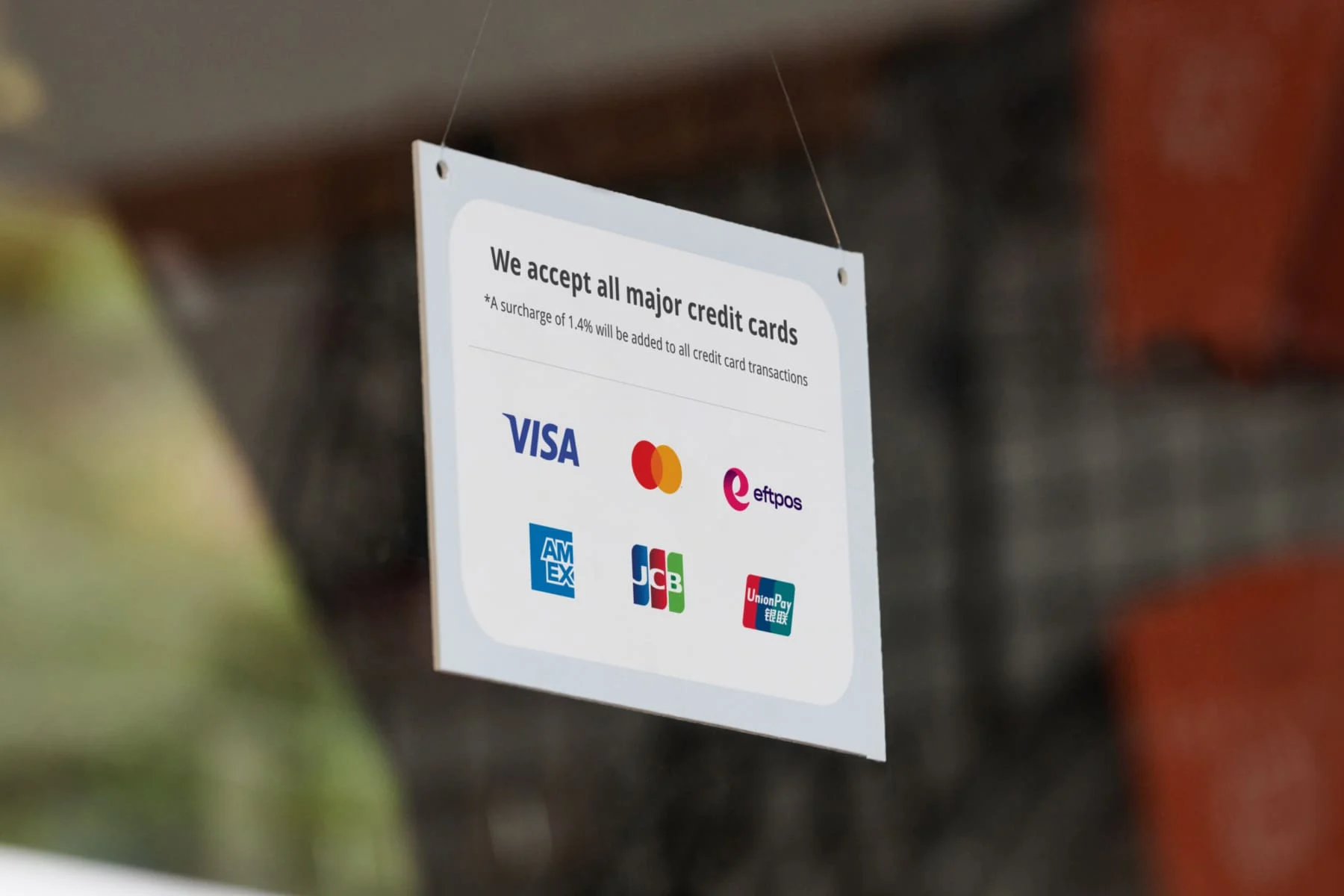
Also check what card types the EFTPOS machine can accept – if your customers use American Express or China UnionPay for example, make sure these payment methods are accepted.
Hospitality-specific features
If you run a hospitality business, tipping prompts that appear on-screen and are easy to customise will help staff increase their tips. Tableside bill management, allowing you to pull up a customer’s order and close the table directly on the terminal, speeds up service and reduces errors. Likewise, smooth bill-splitting functionality is essential for handling group orders quickly and accurately.
Retail-specific features
For retail businesses, being able to process refunds quickly and accurately directly on the terminal reduces queues and avoids errors at the register. Similarly, being able to customise your receipts with your refund policy, and provide printed receipts — or digital receipts via email or SMS — gives customers a record of their purchase, and will make returns smoother.
Portability and connectivity
If you need to take payments on the go, you’ll need a small, portable machine that’s practical to carry. Similarly, ensure the machine offers SIM card connectivity. If you’re operating in a rural area and rely on Starlink, double check that the machine connects with this internet provider.
Ease of use
Your EFTPOS terminal should be easy for all staff to use, with minimal training, especially if you hire casual or seasonal workers. Look for a design built with your business in mind: prompts should be clear, workflows intuitive, and the system should feel natural to operate.
POS system integration
If you use a point-of-sale system (or are planning to in the future) the ability of your EFTPOS machine to connect with it is critical. With integrated EFTPOS, the sales total is automatically sent from your POS to the terminal, so staff don't have to manually enter amounts. This reduces human error, speeds up transactions, and makes the checkout process smoother for both staff and customers.
Zeller POS connects natively with Zeller Terminal with no integration required, meaning sales totals are sent to the terminal instantly with no risk of connection errors. Zeller Terminal also integrates with over 600 POS providers across a wide variety of industries. Check out our partner hub to find all the systems Zeller Terminal connects with.
Security and compliance
Fraud and data breaches can affect businesses of any size, and recurring chargeback fraud in particular can be costly. When selecting an EFTPOS provider, make sure they follow industry standards such as PCI DSS compliance, which ensures cardholder data is handled securely, and use encryption to protect transactions from interception.
At Zeller, we exceed the PCI DSS standard, and our support team monitors transactions 24/7, using intelligent machine learning to detect and respond to suspicious activity before it impacts your business. Find out more about security at Zeller.
Reliability and support
Your business needs to be able to continue processing cashless payments even during periods of downtime, whether caused by a Wi-Fi outage or a local power disruption. Look for a terminal that offers multiple connectivity options, such as Wi-Fi and 4G via a SIM card, so you can switch seamlessly between networks if one goes down and keep processing payments without interruption. Zeller Terminal supports 4G SIM card connectivity, making it easy to stay online even when your primary network fails.
Battery life is equally important, particularly if your business takes payments on the go. If you take tableside payments or run a mobile business, you need a terminal that can last a full working day without needing to be plugged in. Zeller Terminal is built to handle over 1,000 transactions on a single charge, giving you the confidence to trade through even your busiest days.
Finally, consider the quality of customer support on offer. If something does go wrong, you want fast, reliable help, not an email ticketing system with slow turnaround times. Zeller offers 24/7 support via phone, SMS, and email, backed by a local team that can come out in person when the situation calls for it.
Admin management, reporting, and analytics
A good EFTPOS provider should offer more than just payment processing, it should give you clear visibility into how your business is performing. Look for a provider that offers a centralised dashboard where you can track transactions in real time, view sales trends, and generate reports across different time periods. The ability to filter by terminal, location, or date range makes it far easier to spot patterns, compare performance across sites, and make informed decisions about staffing, stock, and trading hours.
Zeller Dashboard brings all of this together in one place. All incoming payments (whether processed through a terminal, POS system, invoice, or virtual link) are automatically compiled into a single transaction report, so you always have a complete picture of your cash flow. You can also track outgoing expenses through multiple accounts and linked debit or corporate cards, with the ability to set individual spending limits per card for greater control over team expenses. For businesses using Zeller POS, detailed sales reports show your top-selling items by revenue and quantity, and can be exported for deeper analysis.
Settlement time
Settlement time refers to how long it takes for funds from your transactions to land in your account, and the difference between providers can be significant. Some settle funds the same day, while others can take up to three business days. The slower your settlement, the greater the pressure on your cash flow, and in some cases, business owners find themselves needing a loan simply to cover expenses while they wait for funds they've already earned.
When choosing a provider, always confirm their settlement timeframe upfront. With Zeller, businesses that pair their terminal with a free Zeller Transaction Account receive same-day settlement, with funds available to spend via their Zeller Debit Card straight away. If you prefer to use your existing business bank account, funds settle the next business day.
Getting up and running
The last thing you want when you're ready to start taking payments is to be held up waiting for hardware to arrive or a technician to come and configure it. Some providers have lengthy application processes and slow delivery times — an unnecessary setback if you're eager to start trading.
Look for a provider whose terminal is intuitive enough to use straight out of the box, with clear prompts and minimal training required. If you hire casual or seasonal staff, ease of use becomes even more important. Some terminals come with a booklet of instructions or require a technician to manage setup on-site — worth checking before you commit.
Zeller Terminal is available to purchase online from the Zeller Shop with free express shipping and same-day dispatch anywhere in Australia, so you can be up and running quickly. Sign-up takes just minutes, and the terminal is designed to be ready to use from the moment it arrives.
&w=3840&q=75)
Not using Zeller Terminal?
Make the switch today and enjoy no monthly fees, and one low, flat transaction fee of 1.4% for all cards, including Amex.
FAQs
What is an EFTPOS machine? What does EFTPOS stand for?
EFTPOS stands for Electronic Funds Transfer at Point of Sale. An EFTPOS machine is a payment terminal that allows businesses to accept card payments in person, including credit cards, debit cards, and digital wallets like Apple Pay and Google Pay.
How much does an EFTPOS machine cost?
The cost varies depending on the provider and pricing model. Some providers require you to rent a terminal on an ongoing monthly basis, while others, like Zeller, let you purchase the terminal outright for a one-off fee with no lock-in contracts or hidden charges. You'll also pay a transaction fee each time a payment is processed — Zeller charges a flat rate of 1.4% for all in-person payments.
Do you need the internet for EFTPOS?
Yes, most payment providers require an internet connection to process card payments, however Zeller Terminal supports 4G connectivity via a SIM card, so you can switch networks if your primary connection drops.
Do you need a phone line to use an EFTPOS machine?
No. Modern EFTPOS terminals connect via Wi-Fi or mobile data and do not require a phone line.
How long does it take to receive funds?
This depends on your provider. Some providers take up to three business days to settle funds, while others offer faster turnarounds. Zeller settles funds the same day when used with a Zeller Transaction Account, or the next business day if you prefer to use your existing bank account.
How do I use an EFTPOS machine?
Once your terminal is set up, using it is straightforward. Enter or confirm the transaction amount, then prompt your customer to tap, insert, or swipe their card. The terminal processes the payment in seconds and provides a receipt, digitally or via a printer, once the transaction is approved.
Are EFTPOS payments secure?
Yes. Reputable EFTPOS providers adhere to PCI DSS compliance standards, which ensure that cardholder data is handled securely. Look for a provider that also uses encryption to protect transactions and monitors for suspicious activity in real time.
What if my internet cuts out?
If your Wi-Fi connection drops, a terminal with 4G SIM card capability, like Zeller Terminal, allows you to switch to mobile data and continue taking payments without interruption.
Can I customise my EFTPOS machine to suit my business?
Yes. Most modern terminals offer a range of customisation options, such as tipping prompts, receipt branding, and user permissions. Zeller Terminal allows you to tailor these settings to suit your business, add your own branded screensaver, and integrates with over 600 POS systems for a fully connected setup.
Is surcharging still legal in Australia?
No. The Reserve Bank of Australia ended card surcharging on eftpos, Mastercard, and Visa from 1 October 2026. Businesses that surcharged before that date had to remove it and either absorb the cost or factor it into their pricing. This makes choosing a provider with a low, predictable flat rate more important than ever.
&w=3840&q=75)
&w=3840&q=75)
&w=3840&q=75)