&w=3840&q=75)
- Business Strategies
Service Charges: A Comprehensive Guide for Consumers and Businesses
A service charge is a mandatory fee added by a business to a customer’s bill.
Service charges help recover specific operating costs and provide pricing transparency.
Service charges differ from surcharges, which recover card processing costs.
Australian law requires service charges be clearly displayed and included upfront.
In Australia, service charges count as business income and are taxable.
Whether you’re imposing them or paying them: service charges can be confusing. Here’s everything you need to know.
In this article, we break down what service charges are, why businesses use them, how they differ from other types of fees, and the key legal requirements to be aware of in Australia. Plus, if you’re a small business owner, we’ll explain a quick, easy way to add service charges to your sales with Zeller’s free point-of-sale system.
What is a service charge?
A service charge is a mandatory fee added by a business to a customer’s bill to cover the cost of delivering the service, such as staff labour or administration. Unlike a tip, however, a service charge is not optional and the amount is set by the business and automatically applied to the bill, usually presented as either:
A percentage of the total bill (e.g. a 10% service charge on group bookings), or
A fixed fee (e.g. a $2 per-ticket booking fee).
Why do businesses apply service charges?
A service charge allows businesses to recover operational costs that aren’t fully covered by standard pricing. It can provide transparency, showing customers exactly what they are paying for, rather than inflating base prices for everyone. Why businesses apply service charges can vary widely depending on the industry:
Hospitality: Weekend and public holiday service charges help cover higher wages, extra staffing, and increased operating costs.
Banking and financial services: Fees like account, ATM, and wire transfer charges recover administrative, compliance, and infrastructure costs.
Travel and airlines: Baggage, booking, seat selection, and airport fees offset fuel, staffing, and infrastructure costs, while charging only for extra services used.
Residential property and accommodation: Strata levies, Airbnb fees, and cleaning charges cover facility maintenance, insurance, repairs, and property management.
Utilities: Water, electricity, and connection fees fund infrastructure development, maintenance, billing, and regulatory compliance.
What's the difference between a service charge and a surcharge?
A service charge is a fee added by a business to cover the additional costs involved in delivering a particular service. Because it's set by the business, they have full discretion over whether to apply a service charge, what it covers, and how much it is. In Australia, many venues apply a service charge of around 10–15%, but the exact amount varies depending on the business and the service being provided.
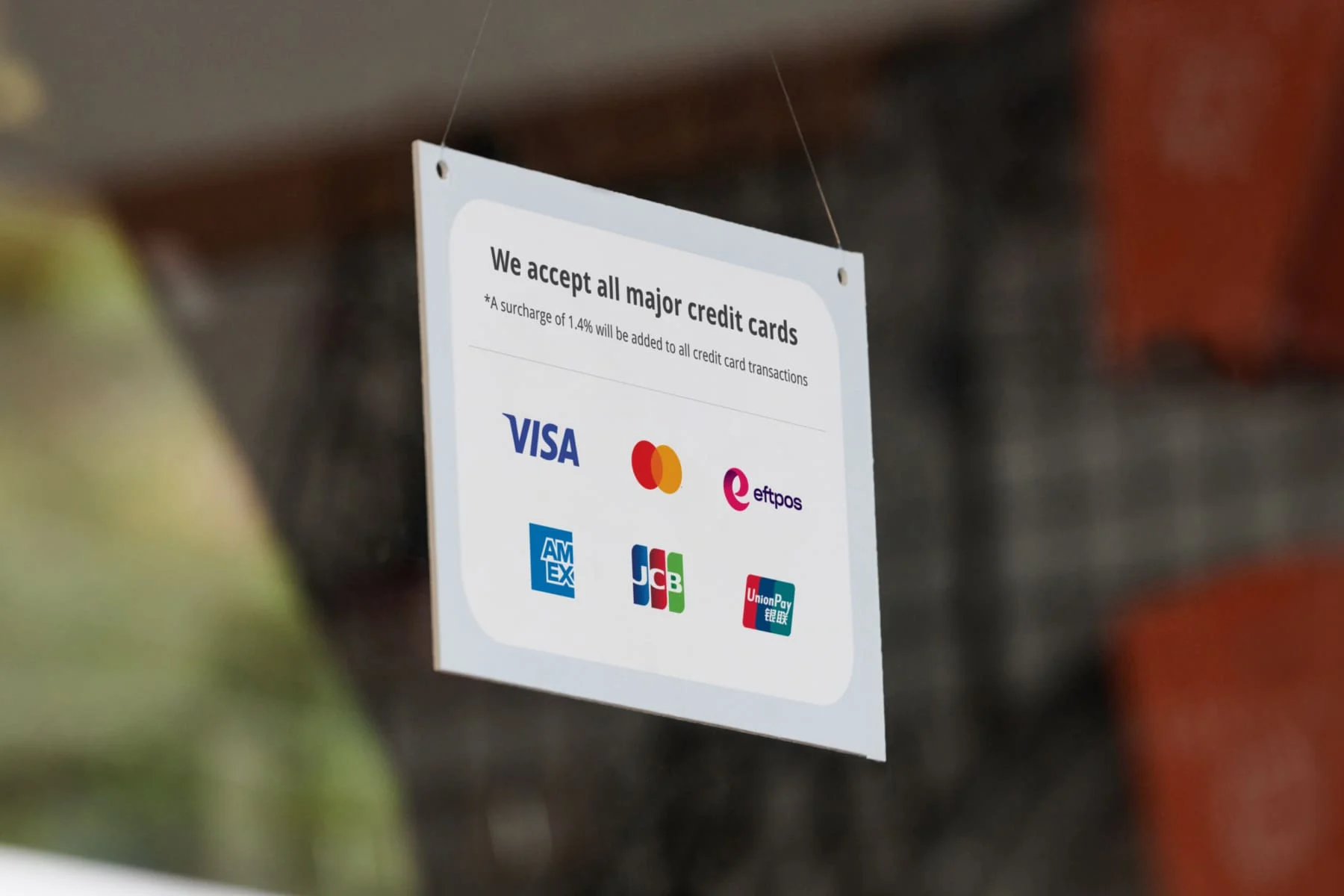
A surcharge, by contrast, is a fee added specifically because a customer is paying by card. Its purpose is to help a business recover the merchant fees charged by their payment provider for processing that transaction. As of 1 October 2026, card surcharging is no longer permitted in Australia, following the RBA's decision to remove card payment surcharges.
Can I apply a service charge instead of a surcharge after 1 October 2026?
You cannot apply a service charge if it's really a surcharge in disguise. A genuine service charge is a fee for a service (like a weekend loading or a booking fee) that applies regardless of how the customer pays. A charge that only applies when a customer pays by card is a surcharge, no matter what it's called. As of 1 October, 2026, Visa, Mastercard, American Express and eftpos all prohibit surcharging under their card network rules, and relabelling a card surcharge as a "service fee" or "admin fee" to work around the ban may be considered misleading conduct under Australian Consumer Law.
If you already apply a genuine service charge, one that isn't tied to payment method, this isn't affected by the surcharging changes and can continue as normal.
What are the legal requirements around service charges in Australia?
Because every industry and business operates differently, there’s no specific law limiting how much a service charge can be. The ACCC does, however, mandate that businesses be transparent and accurate when presenting any service charges they choose to apply. The key legal requirements are:
Prices must be clear and accurate
Businesses must clearly communicate the full cost of a product or service before a customer books, orders, or makes a purchase. They cannot mislead customers about prices or hide additional fees.
Total prices must be displayed upfront
If a service charge is unavoidable or automatically applied, it must be included in the total price shown to the customer. This total must incorporate any taxes, duties, or pre-selected extra fees.
Service charges must follow strict display rules
If you choose to display the service charge separately (for example, "10% weekend service charge applies"), the total price must be shown at least as prominently as the base price, so customers aren't misled about what they'll actually pay.
What are the tax implications of service charges?
In Australia, service charges are treated as part of the business’s revenue and are subject to tax like any other income. Even if the service charge is applied to cover employee wages, it is still considered assessable income and taxed as part of their regular wages.
Tips or gratuities, on the other hand, are directly received by employees. While not technically the business’s income, tips are also considered taxable income and must be reported by the employee to the Australian Taxation Office (ATO).
Can you challenge a service charge?
In Australia, whether you can challenge a service charge depends on how it is presented and whether it complies with consumer law. Businesses must clearly display prices, including any unavoidable service charges, before you book, order, or pay. If a service charge is misleading, hidden, or incorrectly displayed, it may be a breach of the law.
You can report concerns to the ACCC if you believe a business is not complying with pricing rules. The ACCC can investigate and take enforcement or compliance action if the law has been broken. However, the ACCC does not resolve individual complaints or give legal advice about your rights, so it cannot force a business to remove a service charge for one customer.
In practice, your options are:
Carefully check the menu and/or price display before paying—the total must include all unavoidable fees.
Raise the issue directly with the business if you think a service charge is incorrect or misleading.
Report it to the ACCC if you believe there is a systemic breach of pricing rules.
Add a service charge to your sales with Zeller
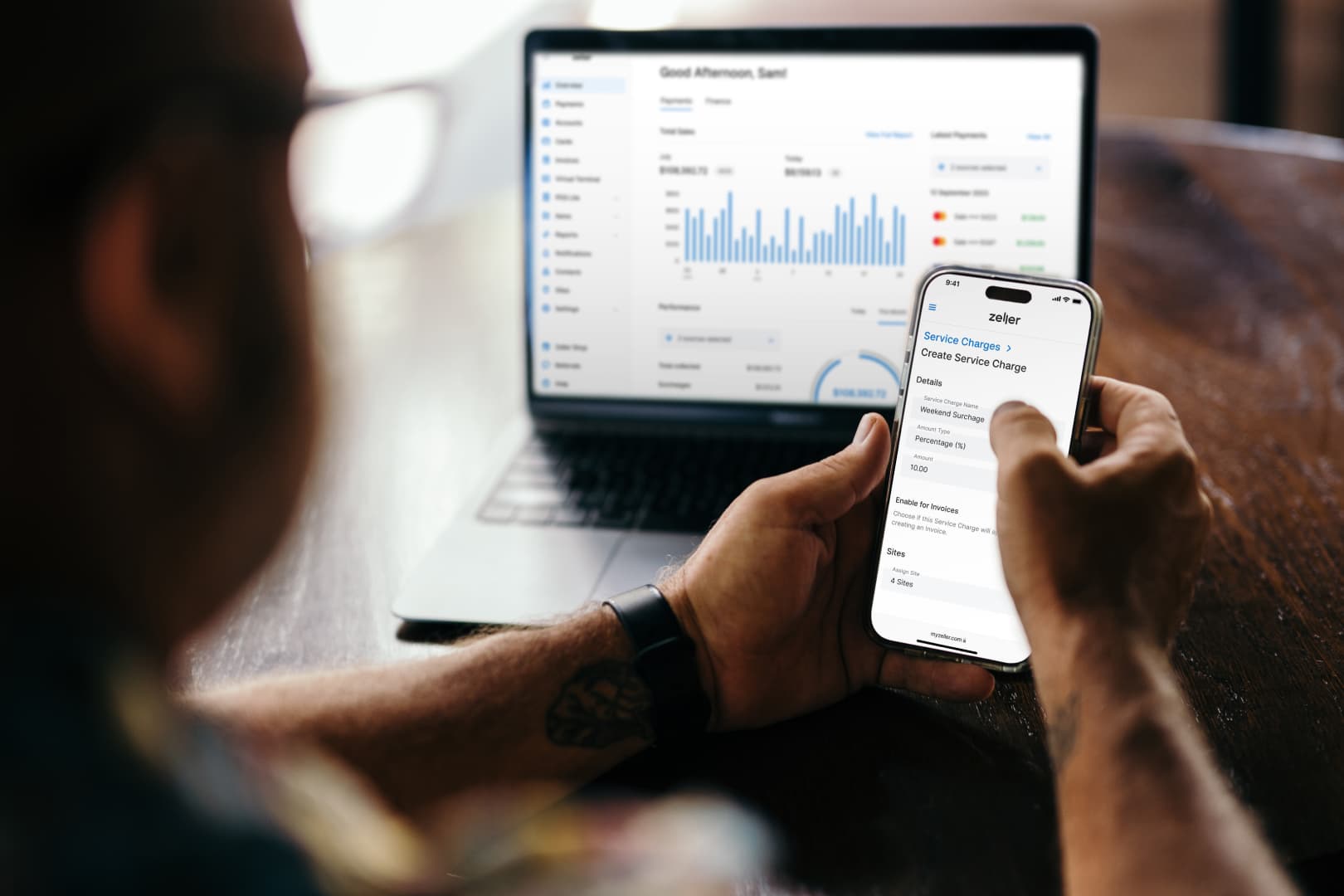
Zeller makes it easy to add a service charge to your sales, whether you're using Zeller Invoices, Zeller POS or Zeller POS Lite.
To get started, login to your Zeller Dashboard, Terminal or App.
Navigate to Items then Select Service Charges.
Click + Service Charges.
Enter in the following item details.
Service Charge Name.
Select Amount Type, Fixed or Percentage.
Amount.
Assign to your preferred Site from the drop-down list.
Enable for Invoices.
Click Save.
The service charge will now be available for selection through Zeller POS Lite and Invoices.
&w=3840&q=75)
Pay only 1.2% for POS and payments with Zeller.
Pay less when you accept integrated payments with Zeller POS and Zeller Terminal.
&w=3840&q=75)
&w=3840&q=75)
&w=3840&q=75)