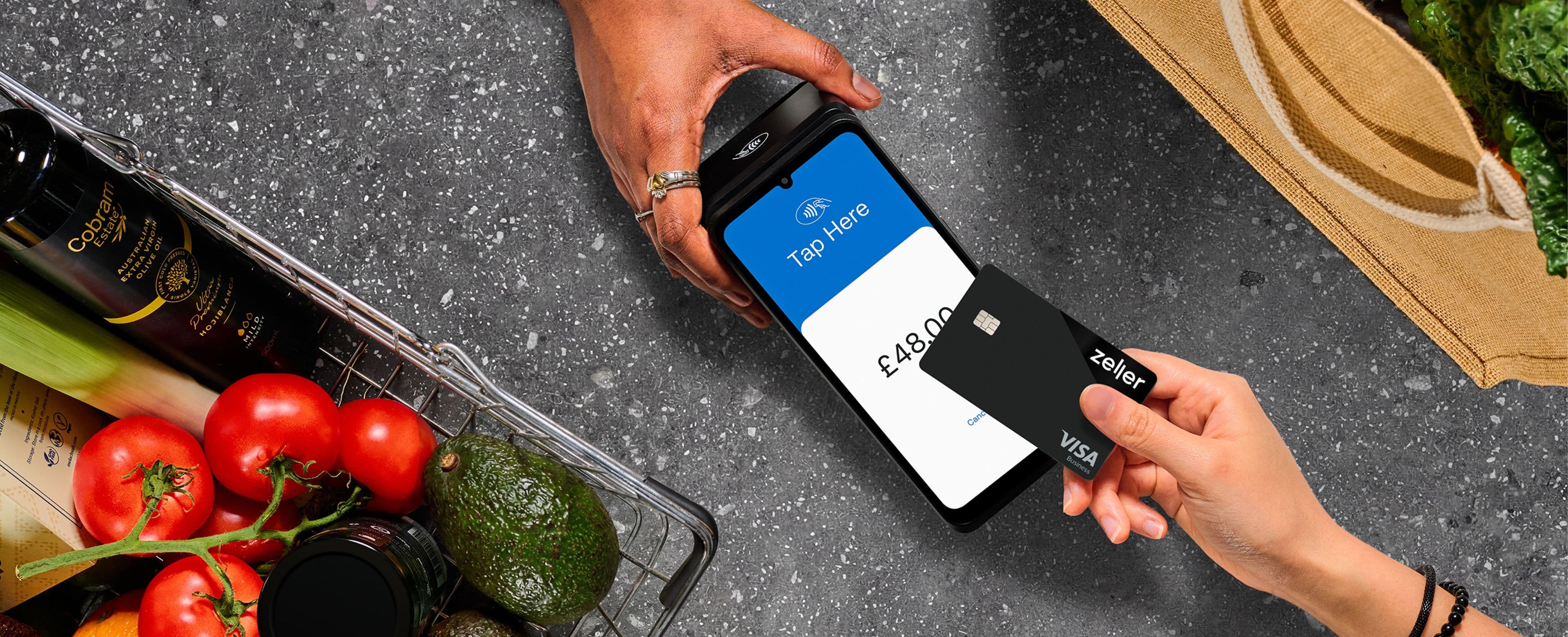
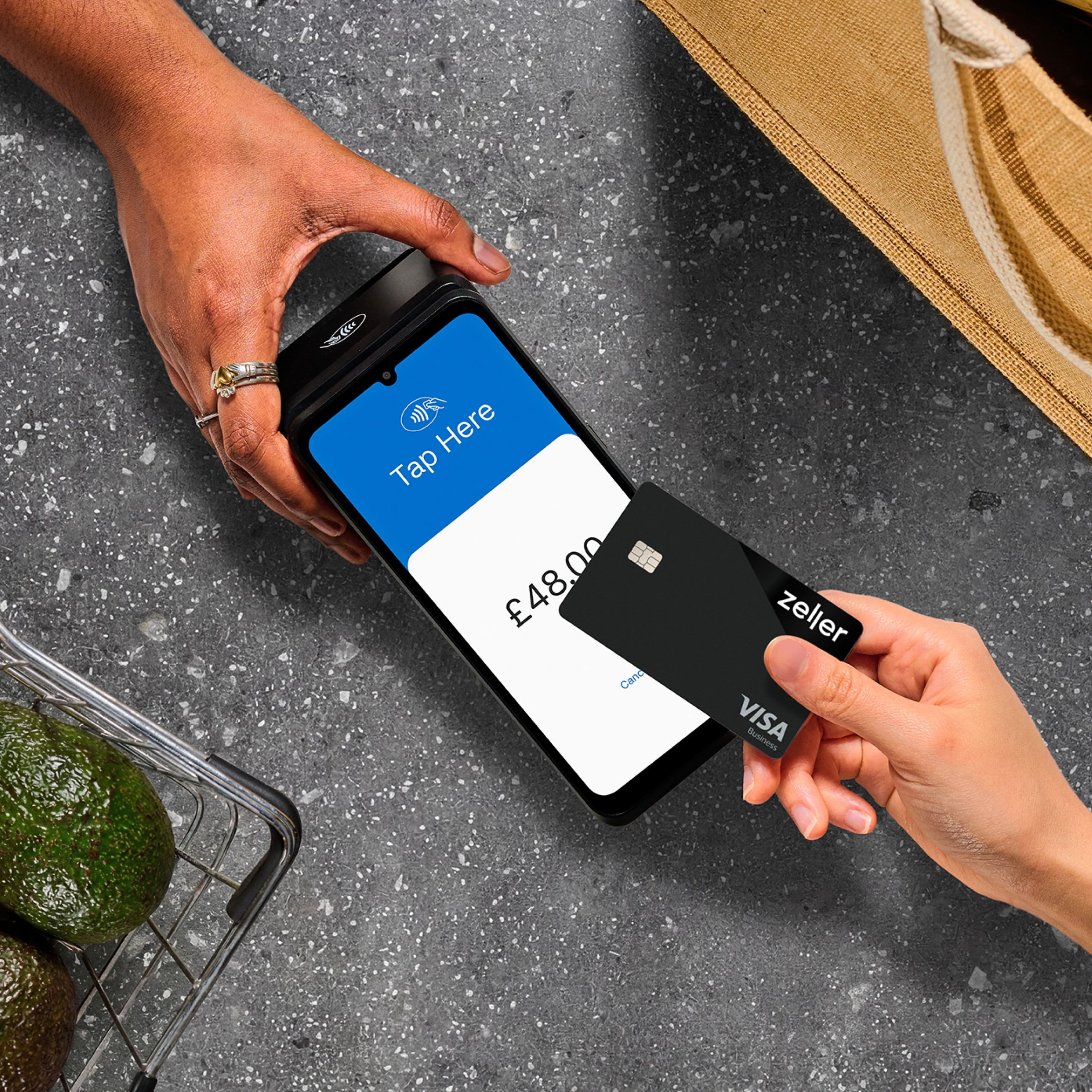

Clear pricing
Low rates starting from 1.3% for domestic Visa and Mastercard payments, and no monthly fees.

Faster settlements
Same-day settlement to your Zeller Account or next business day to any bank.

Smart features
Bill splitting, tipping prompts, digital receipts, custom screensavers, and more.

Free POS system
Create and manage an item library with Zeller POS Lite, built in to the card machine.
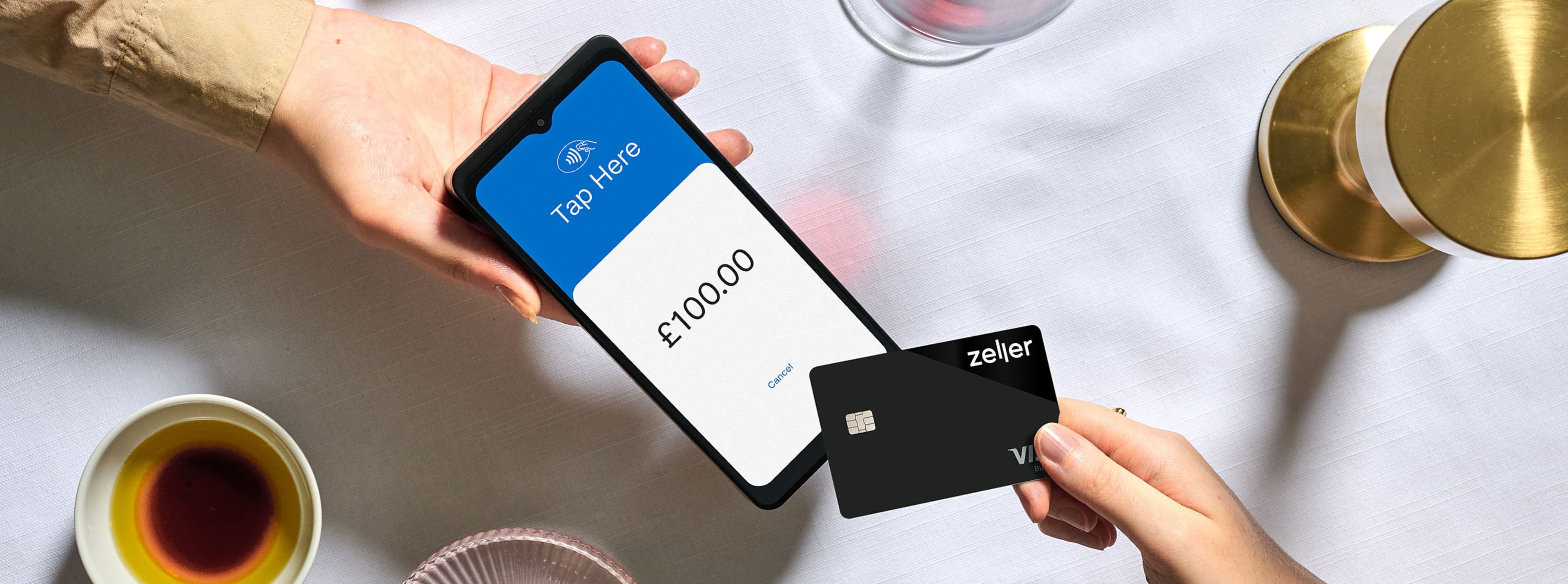
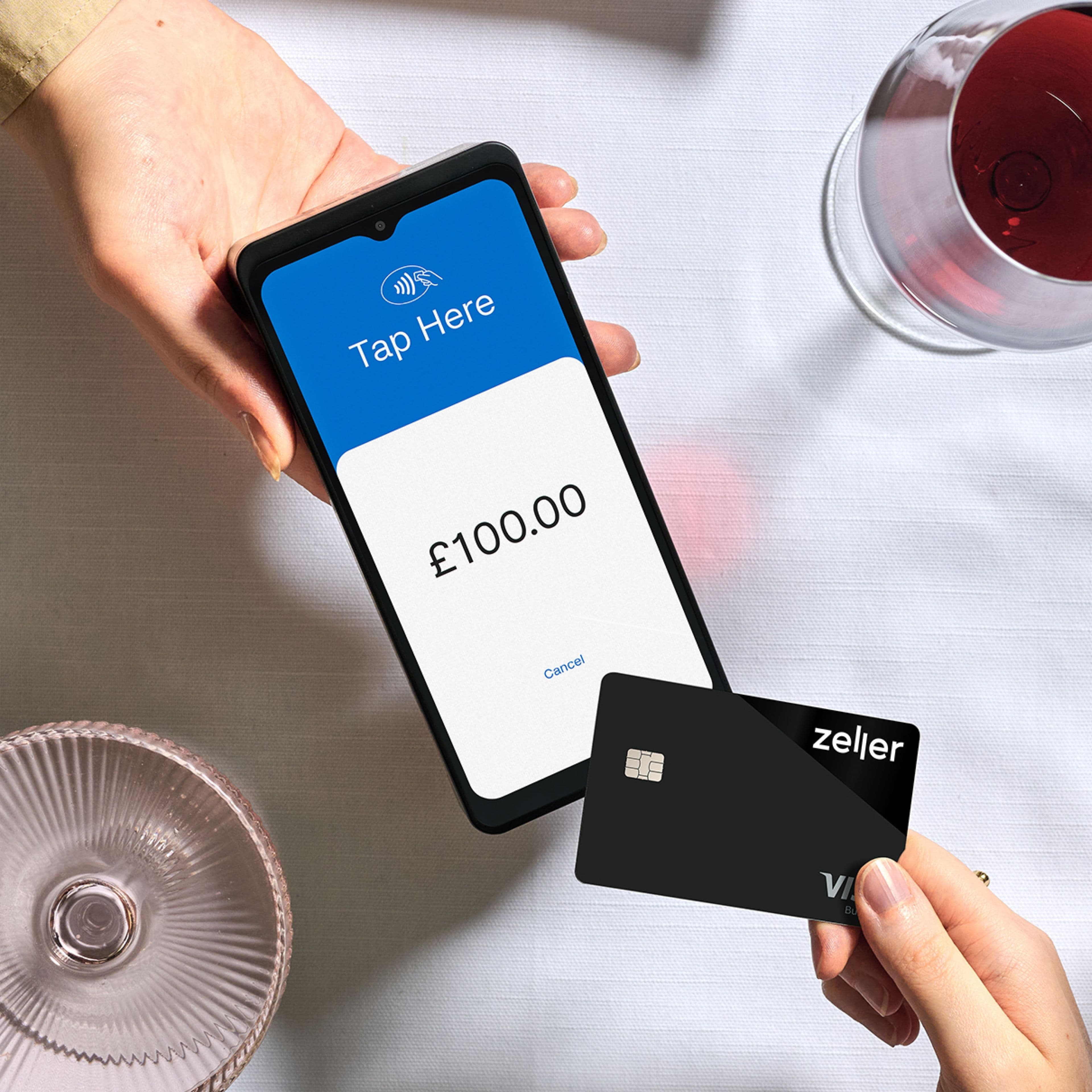
Card machines to suit how you do business
Zeller's portable card machine comes in two distinct models for countertop or mobile selling.
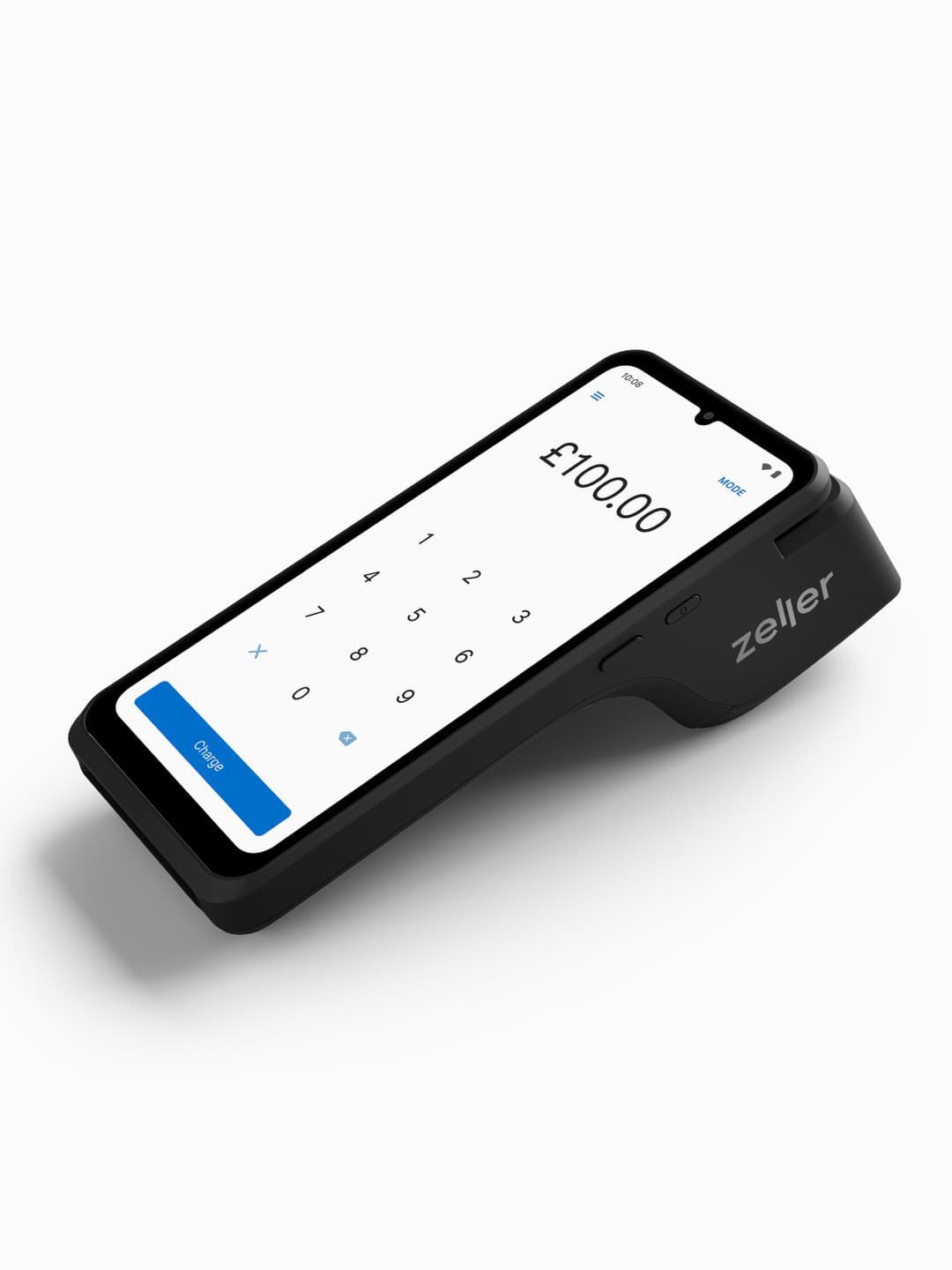
Zeller Terminal 1x
£99
+ VATIncludes both a receipt printer and digital receipts, a free built-in POS system, and a large 6.7-inch display.
Colour · Black
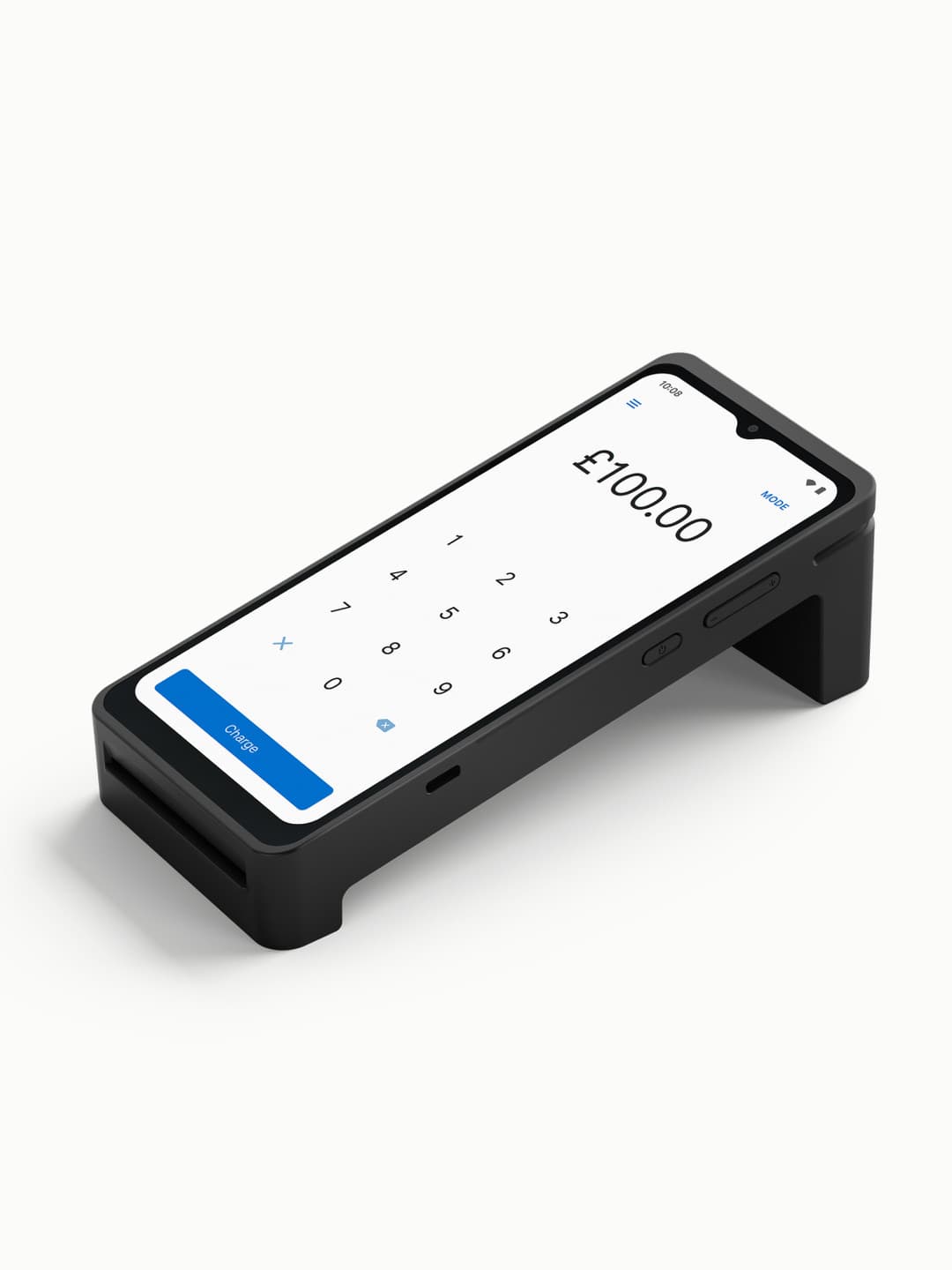
Zeller Terminal 2
£149
+ VATIncludes digital receipts, a free built-in POS system, lightweight form factor, and a large 6.5-inch display.
Colour · Black
Customise your card machine
Zeller Terminal can be configured to complement your brand and aesthetic.
Use your card machine in light or dark screen mode
Set custom screensavers with your logo or promotional message
Choose from white, black, or grey hardware
Free point of sale included
Zeller POS Lite comes built in to Zeller Terminal for free.
Create items, categories, and discounts instantly
Streamline checkout with attributes and modifiers
Assign items to different stores to manage inventory


Reliable and mobile connectivity
Accept payment on the go with Zeller's portable card machines.
Connect to Wi-Fi, 4G SIM, or Ethernet for constant connectivity
Process over 1,000 transactions in one charge
Robust design withstands wear and tear
Explore what more Zeller Terminal can do
Issue digital receipts
via email, SMS, or QR code and customise them with text, a logo, and social handles.


Split payments
by value or number of people and give each diner the option to leave a tip.

Request tips
with automated tipping prompts that can be customised or turned off at any time.

Add a custom screen
with your logo or promotional message to emphasize your brand at checkout.

Compare our industry-leading card machines
 Zeller Terminal 1x |  Zeller Terminal 2 | |
|---|---|---|
| Zeller POS Lite included | ||
| Wi-Fi & SIM card | ||
| Ethernet via adapter | ||
| Ethernet via dock | ||
| Request Tips | ||
| Split payments | ||
| Tap, insert & create custom screens | ||
| Swipe payments | ||
| Print receipts | ||
| Email & SMS receipts | ||
| QR code receipts | ||
| Screen size | 6.7” | 6.5” |
| Hardware colours | Black, White | Black, White, Graphite |
See why UK businesses love Zeller Terminal

Zeller makes it much easier for us to track daily and monthly income, which helps a lot with accounting. Having our funds settle overnight is a huge advantage too.
Luke Mok
Hypepalooza
Brick Lane, London


In many ways, the best payment experience is one that nobody notices. The terminals are quick, easy for the team to use, and they've worked consistently since day one.
Katie Exton
Lorne
Pimlico, London


Fast and reliable payments are essential in a busy retail environment. The moment something doesn't work, you feel it immediately.
Ranjan Gulati
Hide and Skin
Covent Garden, London
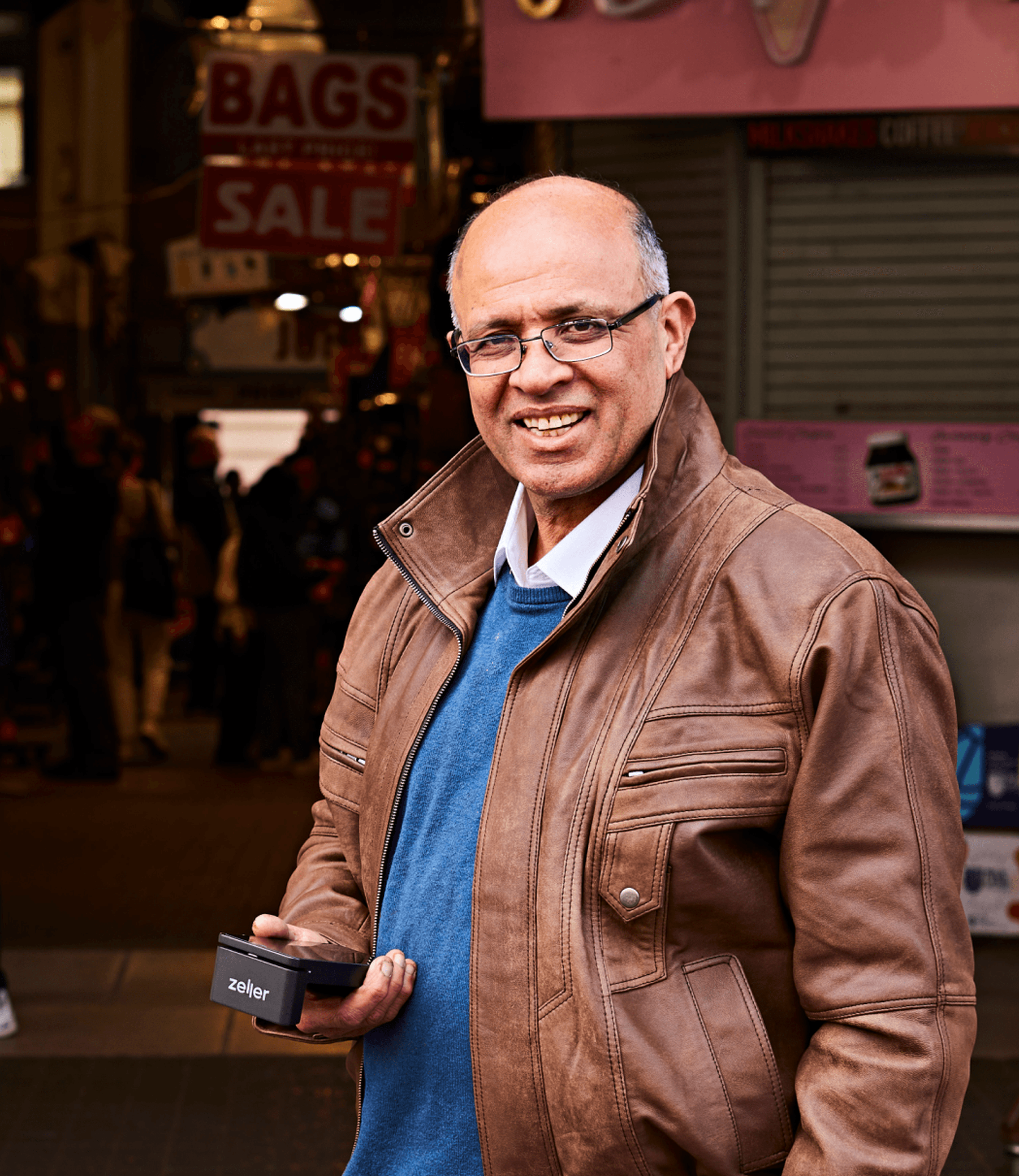

When the bar is packed, you need payments that keep up. Since switching to Zeller, we don't have to worry about slow transactions or missed sales - the system just works, even on our busiest nights.
Conor Gill
Black Horse
Aldgate, London

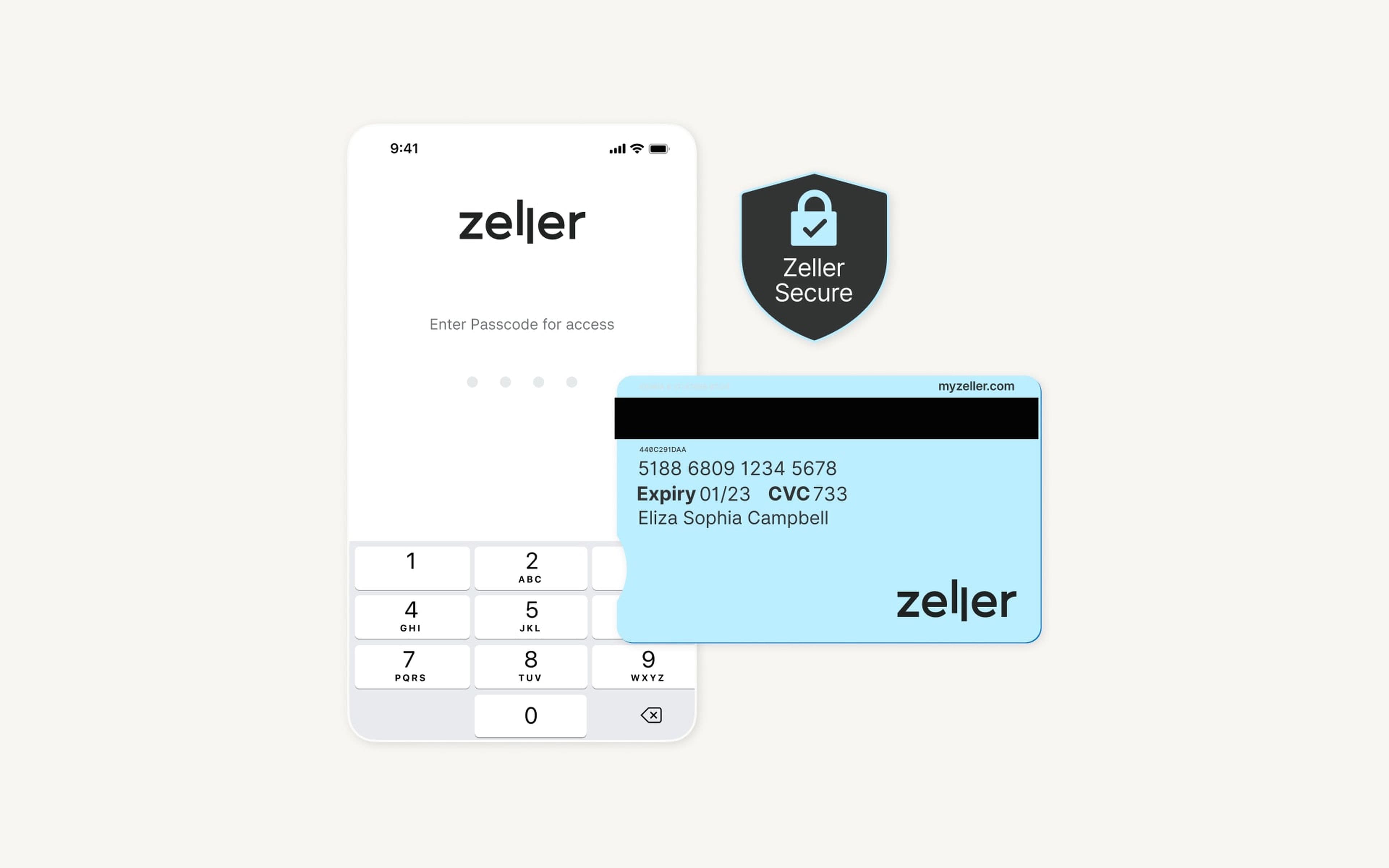
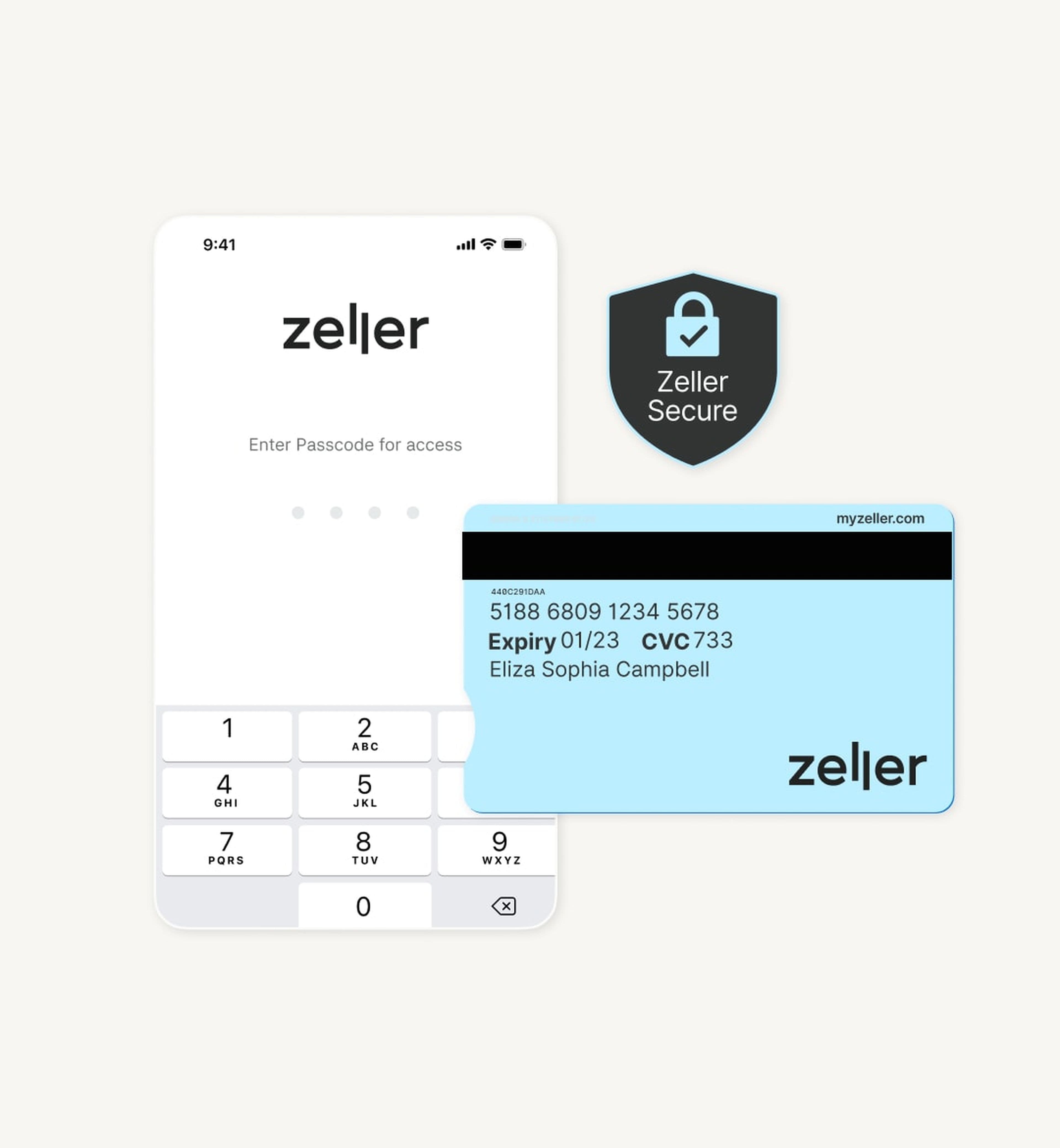
Every payment is secure with Zeller
End-to-end encryption ensures every transaction is secure, and customer data protected.
PCI level 1 compliance with PCI-DSS certification
24/7 fraud monitoring and dedicated chargeback support
No hidden PCI compliance or chargeback fees



Card machines that do more, for less.
Try Zeller risk-free for 30 days, with no monthly rental fees, or lock-in contracts.
In-person transaction fee
1.3%
For Visa and Mastercard domestic cards. Learn more
MOTO transaction fee
1.5%
Accept over-the-phone orders.
Zeller Terminal 1x
£99
Ex VAT. No monthly fees.
Zeller Terminal 2
£149
Ex VAT. No monthly fees.