&w=3840&q=75)
- Payments
Understanding Chargebacks: A Guide for UK Businesses
Chargebacks reverse disputed card payments and can impact your cash flow.
Avoid unmet expectations by clearly describing products and services before sale.
Clear returns policies and visible contact details can help reduce disputes.
Use tracking, signatures, and documented evidence to challenge delivery or service disputes.
Zeller offers 24/7 fraud monitoring, real support, and no chargeback fees to support your business.
At best, chargebacks are frustrating. At worst, they can be costly disruptions that impact your bottom line. Understanding why chargebacks occur, whether legitimate or fraudulent is key to preventing them. Read on to learn how chargebacks work and the steps you can take to reduce them.
What is a chargeback?
A chargeback is a form of customer protection that allows a cardholder to dispute a transaction with their bank, with the aim of having the payment returned to their card. In simple terms, it is a type of payment dispute that results in a refund.
However, instead of your business issuing the refund directly, the customer’s bank reverses the transaction, removing funds from your account and returning them to the customer. This means a customer can receive a refund without your agreement or involvement.
Chargebacks are designed to protect customers from fraudulent or dishonest businesses, but they can also be misused by individuals or criminals using stolen card details.
How do chargebacks work?
When a customer requests a chargeback from their bank, the bank investigates the issue by contacting the business. If the business cannot provide sufficient evidence that the product or service was delivered as promised, the bank may reverse the transaction on the customer’s card.
Typically, the chargeback process works as follows:
The cardholder notices a transaction they believe is unauthorised, fraudulent, or incorrect, and contacts their bank or card issuer to dispute it.
The card issuer investigates by requesting supporting information, such as receipts, order confirmations, delivery details, or communication between the customer and the business.
If the claim is considered valid, the chargeback process is initiated.
The disputed amount is debited from the business’s account and returned to the cardholder.
The business is notified and may have the opportunity to respond with evidence if they believe the chargeback is incorrect.
If the chargeback is upheld, the business loses the funds and may also incur a chargeback fee.
The impact of chargebacks on businesses.
Chargebacks can be more than just frustrating - they can have a significant impact on your business beyond the value of the original sale.
Chargeback fees
Chargeback fees are applied by banks or payment providers to cover the cost of processing disputes. When a chargeback occurs, your business may be charged a fee, regardless of whether the dispute is ultimately resolved in your favour. In the UK, these fees typically range from £15 to £25 per chargeback, but can be significantly higher depending on the card scheme and type of dispute.
Lost merchandise
In the situation where a cardholder receives a product, and initiates a chargeback process, the cardholder is usually obligated to return the merchandise, however this is not guaranteed. If the merchant loses a chargeback in addition to forfeiting the product, the cost to their business is doubled as they cannot resell it or recoup its value.
Operational and marketing costs
Whether you’re selling a product or a service, a lot of work happens before it reaches the customer. From packing and shipping to managing inventory and staff, countless hours are spent preparing the customer’s final product, and time is money. What’s more, a sale doesn’t always come for free. Money spent on marketing also disappears every time a charge is reversed.
Unlike other financial service providers, Zeller will not charge your business additional chargeback fees, and our dedicated Account Services team will work with you to compile information to help you defend the chargeback, too.
&w=1920&q=75)
6 common reasons for chargebacks and how to avoid them.
1. Unmet expectations
If the item or service that a customer pays for is defective or not as described, they can request a chargeback. How to avoid this kind of chargeback:
Ensure all product descriptions whether on a website or in store are accurate;
Use photography that clearly and accurately shows the product;
Publish accurate size guides, if selling online;
Carefully check products for defects before sending them out for delivery.
2. Onerous or unclear returns policy
If a customer cannot find your returns policy, or if the policy is unclear, they can request a chargeback. How to avoid this kind of chargeback:
Make your returns policy clear and straightforward;
Ensure your returns policy is visible on your receipt, website, and in-store;
Make it easy to contact your business by publishing a customer service phone number or email address on your website and receipt.
Learn how to customise your receipts with Zeller here.
3. Unrecognisable business name
If a customer sees an unfamiliar name on their credit card statement, they may request a chargeback. How to avoid this kind of chargeback:
Ensure your business name is clearly and consistently written across your website, receipts, marketing material, and in-store;
Check that how your business name appears on bank statements is clear and up to date.
Learn how to change how your business name appears on their bank statements here.
4. Inefficient service or delivery
If a customer’s product takes much longer to arrive than anticipated, or if a service takes longer than expected, they may request a chargeback. How to avoid this kind of chargeback:
Where possible, provide tracking information for shipments and send updates if there are any delays or issues with the order;
For high-value items, request a signature upon delivery;
Ensure that all terms of service and delivery timelines are clearly communicated to customers, both on your website and in any confirmation material you send them;
Offer prompt and responsive customer support
Keep detailed records of any communication with your customers or shipping documentation, which could be used as evidence in the case a charge is disputed
5. Chargeback fraud
If a dishonest customer wants to avoid paying, while still keeping the purchased goods or services, they might falsely claim that the transaction was unauthorised and request a chargeback. This is what is known as chargeback fraud. To avoid this kind of chargeback, it’s important to have a process for documenting evidence that your agreed upon product or service was provided. How to avoid this kind of chargeback:
Take a photo of your goods in their packaging before they are sent. If providing a service, ensure to take photos or screenshots of the finished work.
Ensure your customer signs a contract upon completion of any work.
Provide your customer with clear, itemised receipts.
If the product is being shipped, provide tracking details and request the customer’s signature
6. Stolen card information
If a criminal uses stolen payment information to make an unauthorised purchase, the legitimate cardholder may discover the transaction on their statement, and initiate a chargeback. How to avoid this kind of chargeback:
Wherever possible, encourage customers to pay in person rather than over the phone. Fraud rates are considerably lower with card-present transactions compared to card-not-present transactions.
When you do have to process over-the-phone payments (otherwise known as MOTO payments), we recommend requesting extra details to help ensure the person making the payment is in fact the legal cardholder, such as their full name, billing address, and some form of ID.
If the product is being shipped, provide tracking details and request the customer’s signature (especially if payment has been made by MOTO).
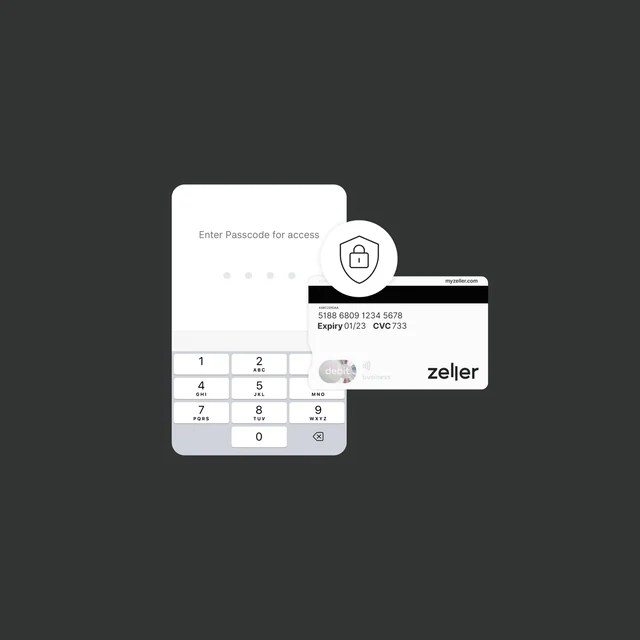
Consider taking payment via Zeller Virtual Terminal or Zeller Invoices, which incorporate an additional layer of security (3DS), which asks customers to verify the payment via their banking app.
Zeller monitors your transactions 24/7 to help prevent fraud before it occurs. Our team works alongside real-time, automated monitoring to identify and reduce fraud risk.
How and when to file a chargeback dispute.
If a customer raises a chargeback, the cardholder’s bank or card issuer will notify you. From there, you’ll have the option to challenge it - this is known as a chargeback dispute.
After being notified, you’ll be given a deadline to respond. Timeframes vary between providers, but are typically between 10 and 30 days from the date of notification. If you miss the deadline, the chargeback will be automatically upheld.
When you’re notified of a chargeback, you’ll also receive a reason for the dispute - for example, that the customer did not receive their goods or that the item was defective. If you choose to challenge it, you’ll need to provide evidence that directly addresses this reason.
For example, if the claim is that the item wasn’t delivered, you should submit any delivery confirmation or tracking information that shows it was received.
Without sufficient evidence, the bank is likely to side with the customer.
How are chargebacks managed at Zeller?
No chargeback fees
Unlike many providers, Zeller does not charge additional fees when a chargeback occurs. Our Account Services team will also support you in compiling the information needed to respond and defend the dispute.
3D Secure authentication
When you accept payments with Zeller Invoices or Pay by Link, you benefit from an added layer of protection against unauthorised transactions. 3D Secure (3DS) authentication may prompt the cardholder to verify the payment using a one-time passcode or their banking app.
24/7 transaction monitoring
Zeller monitors transactions 24/7 to help detect and prevent suspicious activity. Combined with best practices, this helps reduce the risk of fraud and chargebacks.
Chargeback dispute support
If a chargeback does occur, our disputes team is here to help. We’ll work with the bank on your behalf and support you through the process - without charging a fee. Our support team is available 24/7, with real people ready to help whenever you need it.
&w=3840&q=75)
&w=3840&q=75)
&w=3840&q=75)
&w=3840&q=75)