Choosing the right card machine is one of the most consequential decisions a small business will make, with implications that extend well beyond the device itself. The right choice affects your cash flow, your day-to-day operational efficiency, and how much of your revenue you keep after fees.
Why a card machine is now an essential for UK small businesses
In the UK, the way customers pay has shifted dramatically, moving the card machine from a "nice-to-have" to an absolute commercial necessity for small businesses. Recent data shows that cash transactions have dropped to below 10% of all payments, while debit cards have cemented themselves as the nation’s preferred payment method. Furthermore, we have seen a 39% surge in the use of contactless payments and mobile wallets like Apple Pay and Google Pay.
For the modern small business, relying solely on cash is no longer just inconvenient—it is a barrier to entry. Customers now expect frictionless, digital-first payment experiences, and those who cannot offer them risk losing sales to competitors who can.
Avoiding the "lock-in" card machine rental traps
When shopping for a card machine for your small business, you will encounter two very different approaches to contracts. Traditional merchant service providers often insist on 12-to-18-month rental agreements. While these may offer a lower upfront hardware cost, they lock your business into rigid terms that can be difficult—and expensive—to exit if your business needs change.
In contrast, the modern "pay-as-you-go" model—such as the one offered by Zeller—prioritises flexibility. By owning your hardware outright with no lock-in contracts, you retain full control over your operations. This is particularly vital for small businesses where cash flow and operational agility are paramount; you are not tied to a provider that no longer serves your needs, and you aren't paying monthly rental fees during quieter trading seasons.
Scaling your small business: High-volume bespoke card machine pricing
One common misconception is that "pay-as-you-go" models are only for low-turnover traders. In reality, growing businesses often reach a stage where their volume—typically once you surpass £75,000 to £200,000 in annual card turnover—warrants a more tailored approach.
If your business is hitting these higher thresholds, you should not have to settle for standard "off-the-shelf" transaction rates. Many transparent providers are willing to offer bespoke, lower transaction rates for high-volume merchants. Before settling on a provider, it is worth reaching out to discuss your specific turnover figures. By negotiating a rate that reflects your actual volume, you can significantly improve your net margins, ensuring that your payment processing costs scale alongside your success rather than acting as a drag on your profitability.
Card machine vs card reader vs PDQ terminal: which do you need?
Not all card machines are built the same, and understanding the differences will help you choose the right device for how your business operates.
Card readers are the most compact and affordable option. They connect to a smartphone app via Bluetooth, rely entirely on your phone's screen and internet connection, and are ideal for very low-volume or occasional sellers, think market stalls or pop-up events. They typically can't operate independently of a paired phone.
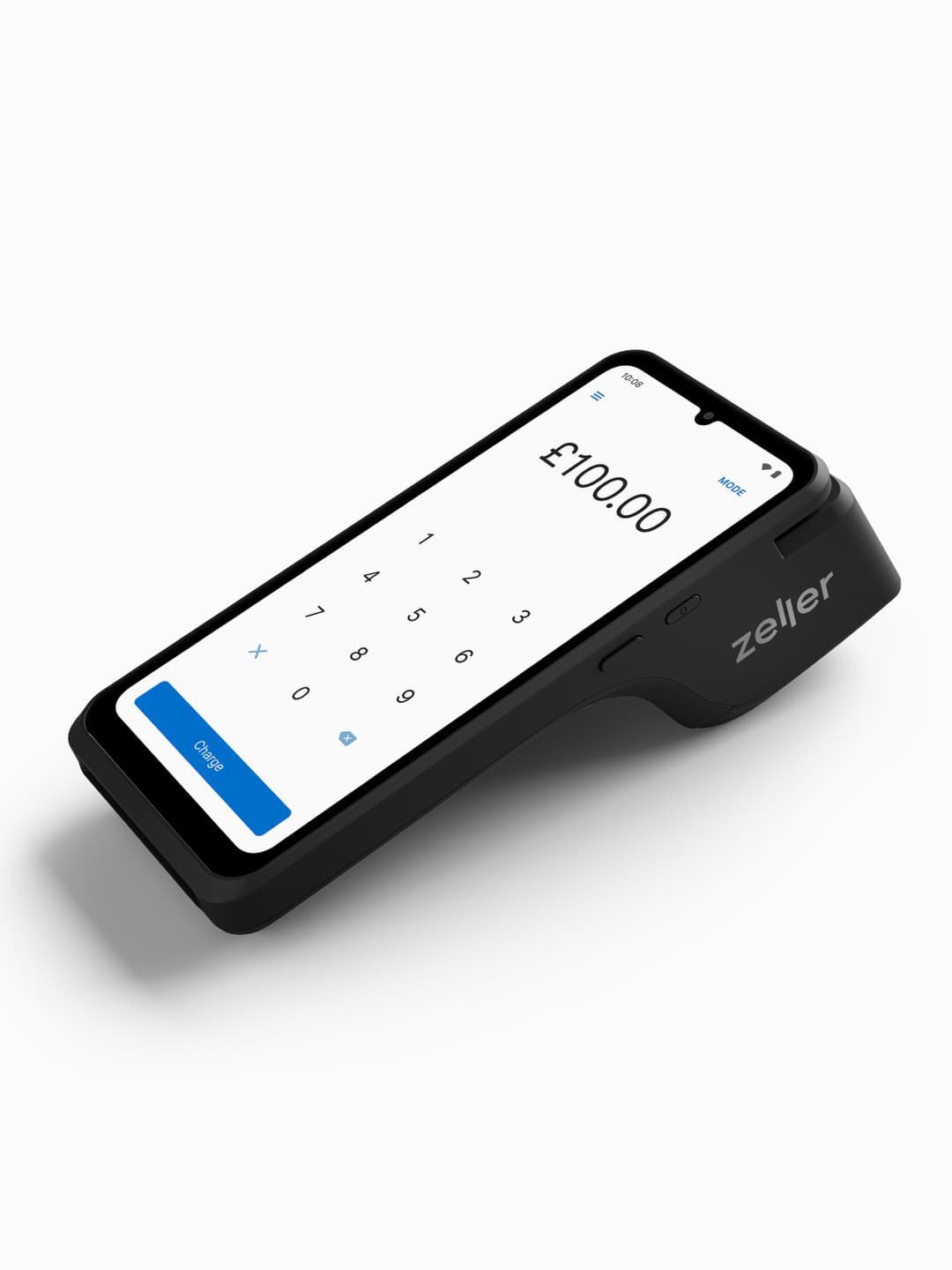
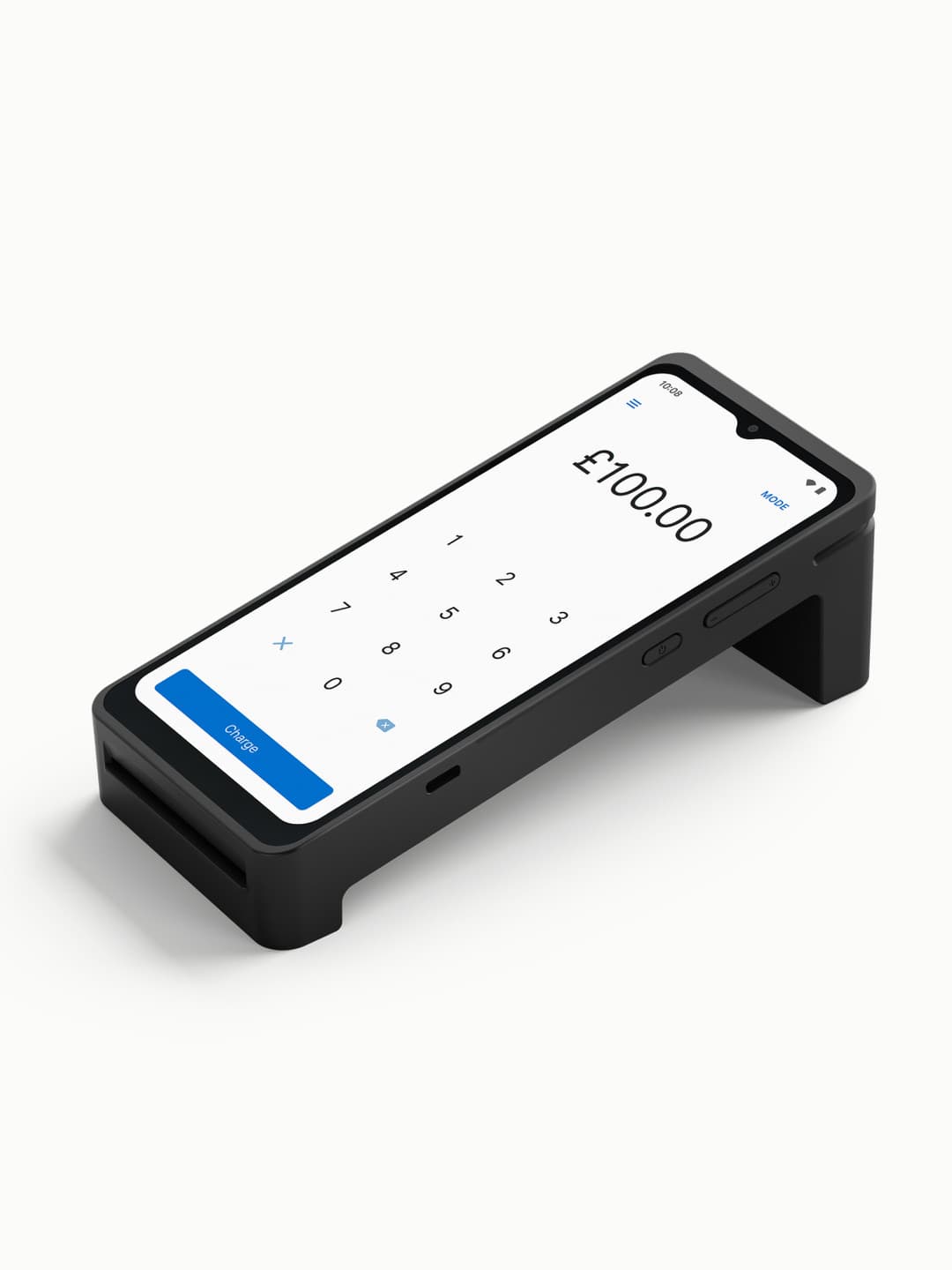
Smart and portable card terminals, like Zeller Terminal, are standalone touchscreen devices that don't require a separate phone or app to operate. They connect via Wi-Fi or an integrated 4G SIM card, making them suited to businesses that move around: hospitality staff taking payment at the table, tradespeople on a job, or retailers who want the flexibility to walk the shop floor. Some, like Zeller Terminal 1x, include a built-in thermal receipt printer; others rely on digital receipts via email or SMS.
PDQ terminals (an older term standing for "Process Data Quickly") are typically wired, countertop devices built for fixed checkout points with consistently high transaction volumes, such as larger retail counters.
For most small and micro businesses, a smart portable card machine like Zeller Terminal offers the best balance: the reliability and features of a standalone device, without being tied to a single countertop location.
How much does a card machine cost?
The best card machine pricing in the UK generally falls into two models, and understanding the difference is the single biggest factor in keeping costs under control.
Pay-as-you-go, where you buy the hardware outright (typically £19 to £199 + VAT depending on the device) and pay a per-transaction fee, usually ranging from around 0.8% to 1.75% for domestic cards, with no ongoing monthly cost.
Monthly hire, where you pay a recurring rental fee (typically £10 to £25 per month) in exchange for the hardware, often combined with a custom transaction rate negotiated based on your turnover. This model usually involves a longer-term contract.
Zeller follows the pay-as-you-go model: Zeller Terminal starts from £99 to purchase outright, with no monthly fees, no lock-in contracts, and a low 1.3% transaction fee on domestic Visa and Mastercard payments (1.5% for transactions taken manually over the phone). For businesses that want to avoid long-term commitments, this is generally the more flexible option.
When comparing providers, look beyond the headline transaction rate. Some providers add monthly account fees, PCI compliance fees, chargeback fees, or minimum monthly transaction requirements that aren't obvious until after sign-up. The true cost of a card machine is the combination of hardware cost, transaction fees, and any recurring charges, not any single number in isolation.
Zeller Card Machine payouts and settlement speed
How quickly funds reach your account can be just as important as the fee you're paying, particularly for cash-flow-sensitive businesses. Settlement speed varies significantly by provider, ranging from instant access (often tied to a provider's own business account) to two or more business days when settling to a third-party bank.
Zeller settles payments overnight into a free Zeller Business Account, or the next business day if you'd prefer to settle into a different bank account.
For businesses operating on tight margins, faster settlement isn't just a convenience; it directly affects your ability to pay suppliers, staff, and overheads on time, without relying on additional working capital or overdraft facilities.
Connectivity and offline card payments
Some modern standalone card machines, like Zeller Terminal, offer dual connectivity, connecting via Wi-Fi or an integrated 4G SIM card so payments can still be processed if one connection drops. This is particularly useful for mobile or outdoor businesses without reliable Wi-Fi.
Some premium terminals also support an "offline mode", which allows transactions to be queued and processed once connectivity is restored, even if the device is fully disconnected. This feature isn't universal across providers, so it's worth checking with your provider directly if uninterrupted connectivity is a priority for your business. Zeller Terminal connects via Wi-Fi or 4G SIM but does not currently support offline payment processing, so an active connection is required to process transactions.
For most businesses operating in areas with reliable 4G or Wi-Fi coverage, dual connectivity alone is sufficient. Offline mode tends to matter most for businesses regularly trading in low-signal environments, such as rural markets or large event venues.
Integrating your card machine with other business software
A card machine increasingly needs to work as part of a wider business toolkit, not just as a standalone payment device. When choosing a provider, consider how well the terminal integrates with point-of-sale software, accounting tools like Xero, inventory management, and invoicing.
Zeller Terminal integrates natively with Zeller POS, at no extra cost, allowing businesses to build an item library, track sales, and manage stock across multiple sites.
If your business already relies on specific software for point of sale, stock management, or accounting, it's worth confirming integration compatibility before committing to a provider, since switching terminals later can mean re-establishing those connections from scratch.
Choosing the right card machine for your business
There's no single best card machine, only the device that best matches how your business operates. As a starting point:
If you're an occasional or very low-volume seller, a basic Bluetooth-connected card reader paired with a smartphone app is likely the most cost-effective choice.
If you run a small or growing business that needs reliability, mobility, and built-in features like POS, receipts, and tipping, a standalone card machine, like Zeller Terminal, is a good fit.
If you operate from a fixed location with consistently high transaction volumes, a wired countertop PDQ machine, like Zeller Terminal, may offer the most stable, heavy-duty solution.
Whichever route you choose, weigh up the full picture: hardware cost, transaction fees, contract length, settlement speed, software integrations, and security compliance, rather than focusing on any single factor in isolation.
&w=3840&q=75)
&w=3840&q=75)
&w=3840&q=75)
&w=3840&q=75)


&w=3840&q=75)
&w=3840&q=75)
&w=3840&q=75)
&w=3840&q=75)
&w=3840&q=75)


&w=3840&q=75)
&w=3840&q=75)

&w=3840&q=75)

&w=3840&q=75)

&w=3840&q=75)

&w=3840&q=75)
&w=3840&q=75)


&w=384&q=75)
&w=256&q=75)
&w=3840&q=75)
&w=3840&q=75)